
Tag Archives | ADHD

EP 782

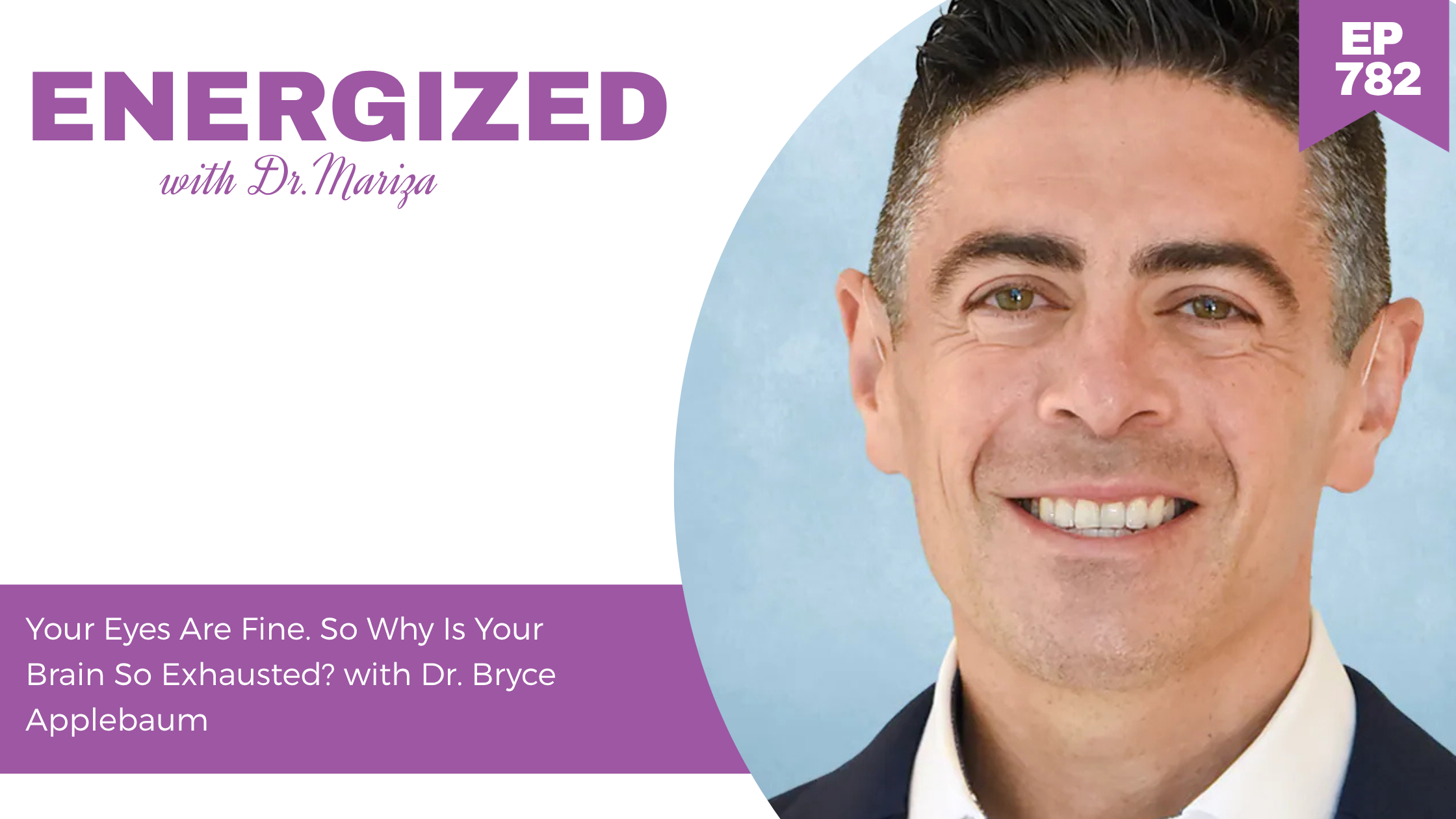
782: Your Eyes Are Fine. So Why Is Your Brain So Exhausted? with Dr. Bryce Applebaum

Listen to the Episode Here

Or, listen on your favorite app: YouTube | iTunes (Apple Podcasts) | Spotify | Amazon Music | iHeartRadio | Pocketcasts

Episode Summary

Have you ever gotten to the end of a long day on your computer and felt like your brain was simply done?

Your eyes are tired. You can’t focus. Light feels irritating. Reading takes more effort. Maybe you even start avoiding your phone because you cannot look at another screen.

Most of us assume that means our eyesight is getting worse.

But in this episode, Dr. Mariza sits down with neuro-optometrist Dr. Bryce Applebaum to explain why eyesight and vision are not the same thing.

Eyesight describes how clearly you see. Vision involves how your brain receives, filters, processes, coordinates, and responds to the information coming through your eyes. And when that eye-brain connection isn’t functioning efficiently, symptoms can show up as headaches, motion sickness, dizziness, trouble focusing, sensory overload, brain fatigue, and even ADHD-like behaviors.

Dr. Bryce also explains why screens place such unusual demands on the visual system, why functional vision issues can become more noticeable during midlife, and how concussion and other brain injuries can disrupt vision even when standard eye exams look normal.

The encouraging part?

The brain remains adaptable.

Through targeted vision training and the right evaluation, Dr. Bryce explains that the eye-brain connection can often be retrained and strengthened at almost any age.

DR. BRYCE APPLEBAUM

Dr. Bryce Applebaum is a neuro-optometrist specializing in vision performance and helping people improve how their eyes, brain, and body work together.

His work focuses on functional vision, visual processing, traumatic brain injury, concussion recovery, learning challenges, screen-related visual stress, and vision performance training.

In this conversation, Dr. Bryce explains why a traditional eye exam may miss important functional vision problems and why improving vision can involve far more than simply changing a glasses or contact lens prescription.

IN THIS EPISODE

  1. Why eyesight and vision are two very different things
  2. How functional vision problems can cause brain fog, headaches, motion sickness, and sensory overload
  3. Why visual processing problems can sometimes look like ADHD
  4. How changing hormones and screen exposure can increase visual strain in midlife
  5. Why screen time places unusual demands on the eye-brain connection
  6. The childhood signs that may point to an undiagnosed functional vision problem
  7. Why concussion and traumatic brain injury can affect vision even when eyesight appears normal
  8. How vision performance training uses neuroplasticity to retrain the brain
  9. Practical ways to reduce screen strain and support healthier visual development

QUOTES

“Any brain at any age has the opportunity to be trained and rewired.”

“There’s neuroplasticity for vision at every age.”

“If we’re testing, we’re not guessing.”

RESOURCES MENTIONED

Stop surviving and start thriving, join Midlife on Fire Collective now

Dr. Bryce Applebaum Website

ScreenFit online vision training program

Dr. Bryce Applebaum Instagram

RELATED EPISODES 

744: The Midlife Brain Reset: How to Protect Your Memory, Focus, and Mental Sharpness Starting Now

668: Your Brain on Perimenopause: The Hidden Neurological Transition No One Warns You About

728: Why Brain Fog Isn’t Random: The Hormone Shift Behind It

769: Is It Perimenopause or Something Else? How to Finally Connect the Dots with Dr. Mariza

Free Download: Easy, Practical Tips to Get More Energy!

Download the free Energy-Boosting Cheat Sheet now to learn how to unlock abundant health and energy that lasts—in only seconds every day!

Read More
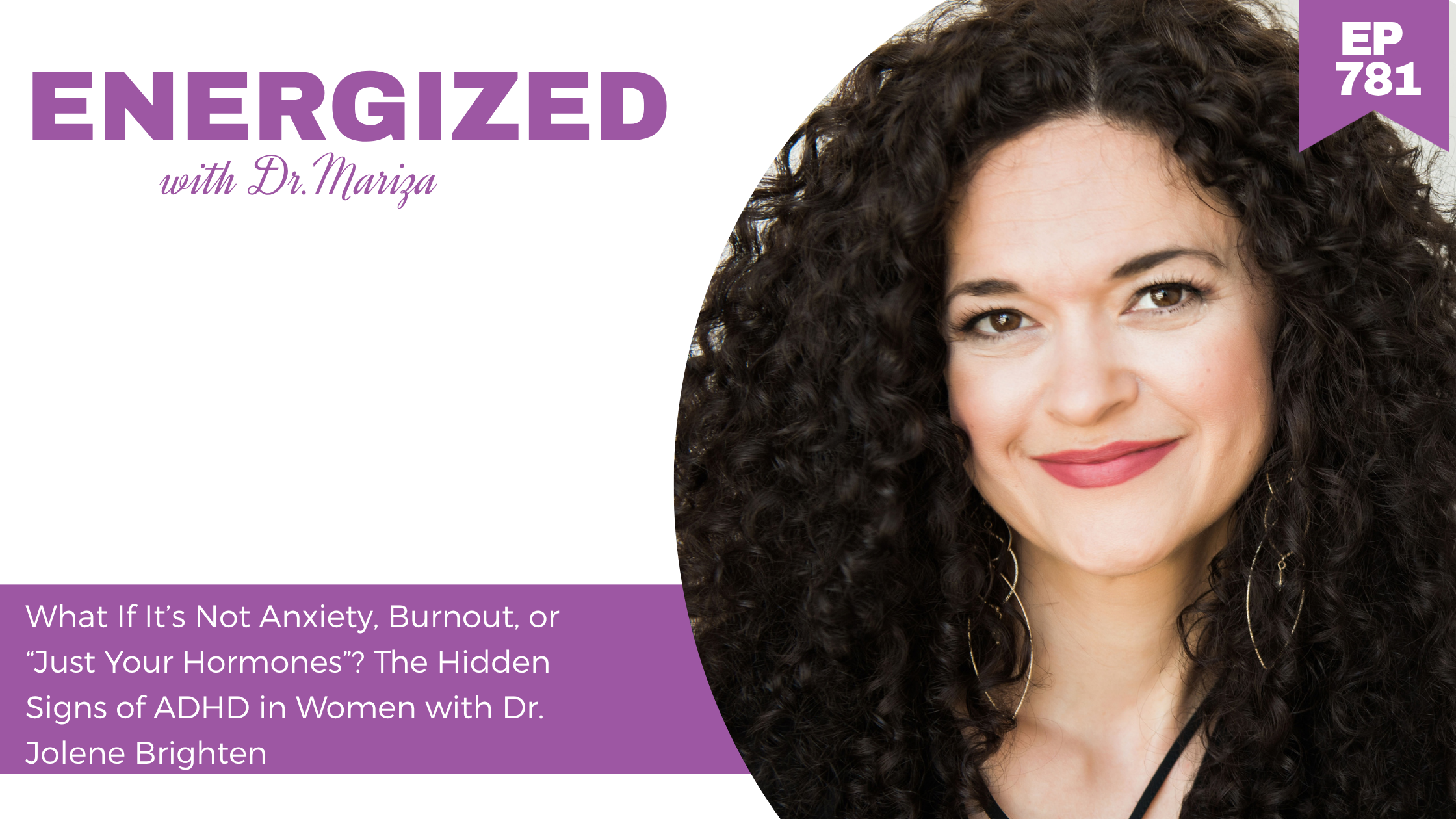
EP 781

781: What If It’s Not Anxiety, Burnout, or “Just Your Hormones”? The Hidden Signs of ADHD in Women with Dr. Jolene Brighten

Listen to the Episode Here

Or, listen on your favorite app: YouTube | iTunes (Apple Podcasts) | Spotify | Amazon Music | iHeartRadio | Pocketcasts

Episode Summary

What if the brain fog, overwhelm, time blindness, racing thoughts, and shorter emotional fuse showing up in your 40s aren’t just perimenopause?

For many women, ADHD has been hiding in plain sight for decades.

In this episode, Dr. Mariza sits down with women’s hormone expert and author Dr. Jolene Brighten to unpack why ADHD looks so different in women, why so many girls learn to mask their symptoms, and why changing estrogen levels during perimenopause can make those coping strategies suddenly stop working.

Dr. Brighten explains how ADHD in women may look less like the stereotypical hyperactive child and more like people-pleasing, perfectionism, constantly running mental lists, interrupting because you’re afraid you’ll forget your thought, chronic overwhelm, and appearing completely put together while internally struggling.

They also dive into the fascinating overlap between ADHD, perimenopause, PMDD, sleep, mitochondrial function, glucose metabolism, neuroinflammation, and emotional regulation.

And perhaps most importantly, they discuss what women can actually do: how movement can support brain energy, why sleep matters so much for the ADHD brain, how to build habits that work with your executive function instead of against it, and exactly how to advocate for a proper evaluation when your concerns are dismissed.

Because if your brain suddenly feels harder to manage in midlife, there may be more going on than “just hormones.”

DR. JOLENE BRIGHTEN

Dr. Jolene Brighten is a board-certified naturopathic endocrinologist, women’s hormone expert, educator, and bestselling author whose work focuses on helping women better understand the relationship between their hormones, brain, and overall health.

Her newest book, ADHD and Women: A Guide to Optimizing Your Hormones and Thriving with ADHD, explores how female hormones can influence ADHD symptoms throughout puberty, the menstrual cycle, pregnancy, postpartum, and perimenopause.

In this conversation, Dr. Brighten brings both clinical expertise and personal experience to the complicated intersection of ADHD, hormonal transitions, PMDD, emotional regulation, sleep, and women finally receiving answers after decades of believing they simply needed to try harder.

IN THIS EPISODE

  1. Why ADHD in women can hide behind people-pleasing, perfectionism, and looking “high-functioning”
  2. How declining estrogen in perimenopause can make masking ADHD symptoms much harder
  3. Why girls with ADHD are often diagnosed with anxiety or depression instead
  4. The connection between ADHD, mitochondrial function, brain glucose metabolism, and neuroinflammation
  5. Why movement can temporarily improve focus and cognitive performance in the ADHD brain
  6. How sleep disruption can compound brain fog, emotional dysregulation, and ADHD symptoms
  7. Why ADHD and PMDD so often overlap and may worsen during perimenopause
  8. How hormones may influence impulsivity, mood, executive function, and premenstrual ADHD symptoms
  9. What to track and say to your doctor if you suspect ADHD but keep getting dismissed

QUOTES

“Build pleasure into your day.”

“It is not just a hormone story.”

“High functioning is the label that society puts on women so that they can feel comfortable asking for more from her.”

RESOURCES MENTIONED

Stop surviving and start thriving, join Midlife on Fire Collective now

Join my brand-new Substack: for the woman everyone depends on who is wondering why everything feels harder in midlife:

ADHD and Women by Dr. Jolene Brighten

Dr. Jolene Brighten Website

Dr. Jolene Brighten Substack

Dr. Jolene Brighten Instagram

RELATED EPISODES 

769: Is It Perimenopause or Something Else? How to Finally Connect the Dots with Dr. Mariza

763: Why So Many High-Functing and Achieving Women Miss the Signs of Hormone Imbalance with Anastasia Sartan

744: The Midlife Brain Reset: How to Protect Your Memory, Focus, and Mental Sharpness Starting Now

661: When “Normal” Isn’t Normal: How to Be Heard (and Taken Seriously) at the Doctor’s Office

Free Download: Easy, Practical Tips to Get More Energy!

Download the free Energy-Boosting Cheat Sheet now to learn how to unlock abundant health and energy that lasts—in only seconds every day!
Read More
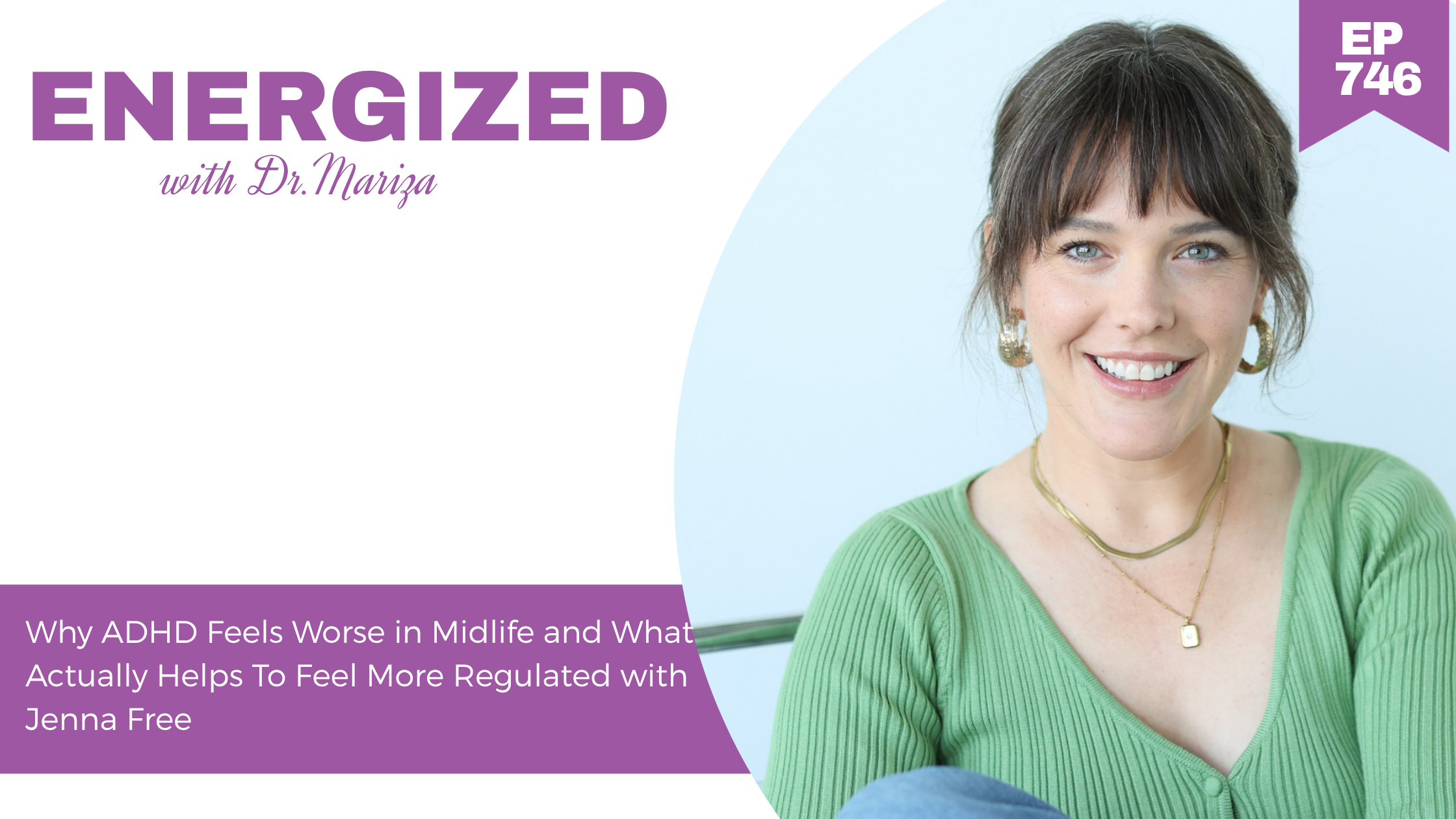
EP 746

746: Why ADHD Feels Worse in Midlife and What Actually Helps To Feel More Regulated with Jenna Free

Listen to the Episode Here

Or, listen on your favorite app: iTunes (Apple Podcasts) | Stitcher | Spotify | Pocketcasts

Episode Summary

“Is your nervous system stuck in overdrive?”

In this episode, Dr. Mariza sits down with Jenna Free, a counselor specializing in ADHD and nervous system regulation, to discuss why so many women in midlife feel overwhelmed, scattered, and exhausted despite their best efforts to stay organized.

Together, they explore how the nervous system gets stuck in a chronic fight-or-flight state, the role of dysregulation in ADHD symptoms, and why traditional productivity hacks simply don’t work when your nervous system is running on empty.

Jenna breaks down her approach to resetting the nervous system and explains how small, consistent changes can lead to massive improvements in mental clarity, energy, and overall well-being.

This conversation offers new insights on how to break free from the cycle of rushing, crashing, and feeling burned out—and provides tangible steps to reclaim control over your brain and nervous system.

Jenna Free

Jenna Free is a counselor specializing in ADHD, nervous system regulation, and mindfulness practices. She is passionate about helping women overcome the chaos of constant overwhelm and hypervigilance by teaching them how to regulate their nervous systems and achieve sustainable productivity. Jenna is the author of The Simple Guide to ADHD Regulation and offers support to those struggling with ADHD and chronic stress

IN THIS EPISODE

  1. How a dysregulated nervous system contributes to ADHD-like symptoms in midlife
  2. The link between survival mode (fight or flight) and chronic overwhelm
  3. Why traditional productivity hacks fail when your nervous system is stuck
  4. Practical tips to help interrupt dysregulation and shift into a more balanced state
  5. The importance of slowing down and creating space for mindful action
  6. How to reframe beliefs and thoughts to support nervous system regulation
  7. Why a regulated nervous system leads to more sustainable energy and better overall functioning

QUOTES

“Being in survival mode is a primal mechanism, but it’s not meant to be how we live in 2026.”

“If you believe that being frantic and rushed is the way to be successful, you will never change.”

“Regulation work isn’t about feeling nice—it’s about functioning better.”

RESOURCES MENTIONED

Use code ENERGIZED and get 10% off on your MitoQ Order

Order my newest book: The Perimenopause Revolution

Order The Simple Guide to ADHD Regulation

Jenna Free Website

Jenna Free Instagram

Jenna Free Youtube

RELATED EPISODES 

744: The Midlife Brain Reset: How to Protect Your Memory, Focus & Mental Sharpness Starting Now

728: Why Brain Fog Isn’t Random: The Hormone Shift Behind It

717: “I Don’t Feel Like Myself Anymore”: The Mental & Emotional Reality of Perimenopause

693: Tired All the Time? It Might Be Hidden Problems With Your Mitochondria with Siobhan Mitchell

Free Download: Easy, Practical Tips to Get More Energy!

Download the free Energy-Boosting Cheat Sheet now to learn how to unlock abundant health and energy that lasts—in only seconds every day!

Read More
Energized-podcast-Shanna-Pearson

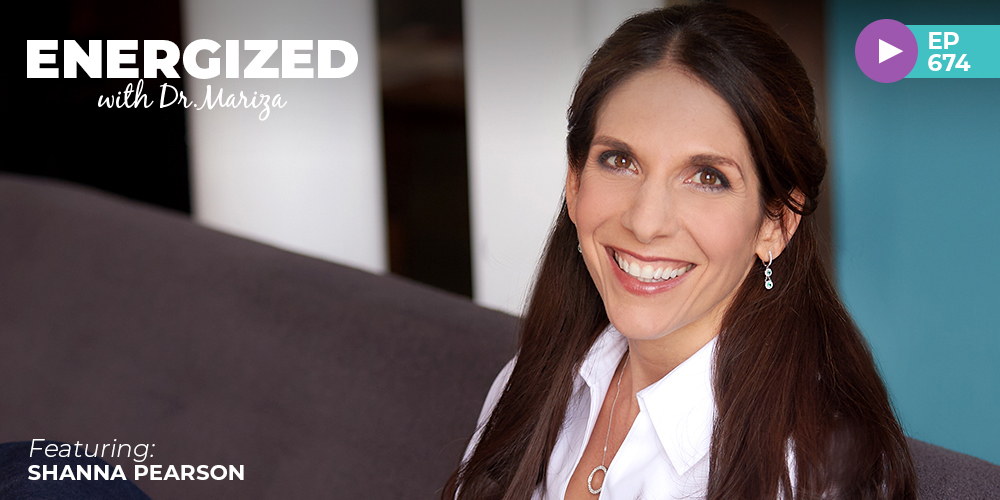
674: Invisible ADHD: The Real Reason So Many Smart Women Are Misdiagnosed And How to Finally Get Answers with Shanna Pearson

Listen to the Episode Here

Or, listen on your favorite app: iTunes (Apple Podcasts) | Stitcher | Spotify | Pocketcasts

Episode Summary

What if you’ve been misdiagnosed or mismedicated for your symptoms, and it took until reaching midlife to figure it out?

That’s exactly what happened with today’s podcast guest, ADHD expert Shanna Pearson, so she’s here to shed light on the real reasons so many women are misdiagnosed for so much of their lives.  

We dive into how ADHD symptoms can mimic other mental health conditions like anxiety and depression, making it even harder for women to get the right diagnosis and support. 

Together, we explore why we as women don’t always “fit the mold” of ADHD and how cultural expectations have kept our symptoms invisible for too long. Plus, you’ll get top tips for managing symptoms of overwhelm and hyperactivity at any stage of life. 

Tune in to make the most of your midlife, and to ensure you’re getting the care and support you need to thrive!

Shanna Pearson

Shanna Pearson is Founder and Director of Expert ADHD Coaching, the world’s largest one-on-one ADHD coaching company, which has administered successful coaching sessions for tens of thousands of clients. Shanna struggled with her own ADHD without realizing it for most of her life, so she now helps others navigate their ADHD diagnoses with ease and confidence. Her new book, Invisible ADHD, offers over 100 proven tools uniquely tailored for the ADHD brain that have transformed thousands of lives over 20+ years. 

IN THIS EPISODE

  1. Helping women prioritize taking care of their mental health 
  2. Addressing the lack of research on women with ADHD 
  3. Gaining agency over your symptoms and tips on advocating to your doctor to get what you deserve
  4. Telltale signs you may have ADHD and have been misdiagnosed 
  5. Setting boundaries and staying in alignment with your values 
  6. Why so many women realize they have ADHD in midlife 
  7. Recommendations for navigating a new ADHD diagnosis 
  8. Top tools that help make your life easier when dealing with overwhelm, hyperactivity, or other common symptoms of ADHD 

QUOTES

“A lot of women with ADHD and other challenges, even if it’s just major hormonal shifts, are being diagnosed or misdiagnosed with depression and anxiety, and then they’re being mismedicated.”

“They’re doing different things for women–a lot of that is internal. So they could be sitting there staring right at you and thinking about something completely different than what you’re talking about. It’s more about an internal hyperactivity versus an external hyperactivity.”

“Now we’re going through a phase of our life where there’s even less dopamine in an already dopamine-deficient brain. So whatever you’ve been able to manage is now basically feeling like it’s falling apart. And it happens quickly.”

RESOURCES MENTIONED

PRE-ORDER Invisible ADHD HERE TO ACCESS EXCLUSIVE BONUSES & Enter to win FREE COACHING! 

Order Invisible ADHD through your favorite retailer HERE 

ADHD Coaching Website

Use code ENERGIZED and get 10% off on your first Troscriptions order

RELATED EPISODES 

670: The Invisible Load: Reclaiming Your Energy, Emotional Resilience & Power in Midlife with  Angela Foster

#629: Unlocking Emotional Resilience with Awareness, Lifestyle and Tools to Regulate Your Stress Triggers with Dr. Drew Ramsey

594: What I Did This Past Year to Heal My Brain and Lower Systemic Inflammation

#503: The Most Effective Rituals We Can Do to Reduce Anxiety and Perceived Stress with Dr. Tâmara Castelo

Free Download: Easy, Practical Tips to Get More Energy!

Download the free Energy-Boosting Cheat Sheet now to learn how to unlock abundant health and energy that lasts—in only seconds every day!
Read More