Archive | Women’s Health

EP 760

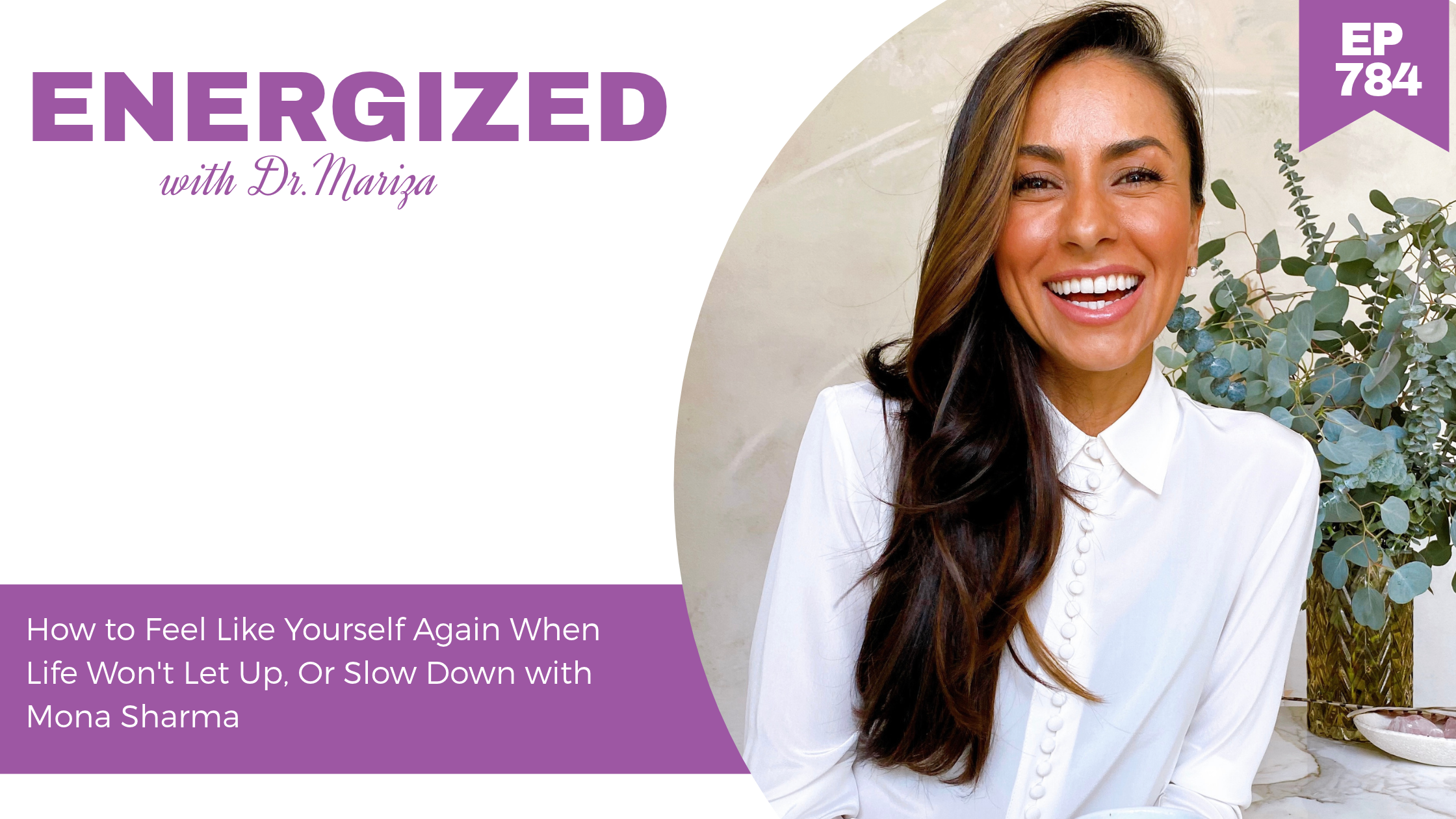
760: The Mindset Shift That Helps You Stop Feeling Stuck with Dr. Rachel Goldman

Listen to the Episode Here

Or, listen on your favorite app: iTunes (Apple Podcasts) | Stitcher | Spotify | Pocketcasts

Episode Summary

Why do so many women reach midlife and suddenly feel like everything is harder than it used to be?

In this powerful conversation, Dr. Mariza sits down with nationally recognized clinical psychologist, behavioral change expert, and author Dr. Rachel Goldman to explore why so many women feel overwhelmed, disconnected from themselves, and stuck during major life transitions.

Dr. Rachel explains how stress, changing responsibilities, shifting identities, motherhood, career demands, and body changes can create a sense of losing yourself—and why the answer isn’t pushing harder, but learning how to respond differently.

Together, they discuss the mindset shifts that help women navigate change with more self-compassion, flexibility, and resilience. They also explore the connection between thoughts, emotions, and behaviors, and how simple tools from cognitive behavioral therapy can help break patterns that keep us stuck.

Dr. Rachel also shares why self-care doesn’t have to mean adding another overwhelming task to your list. Instead, small intentional moments like movement, breathing, time outside, connection, and creating a reset can completely shift how you show up in your life.

If you’ve been wondering whether you’ll ever feel like yourself again, this episode is a reminder that change doesn’t mean you’ve lost who you are—it may be an invitation to step into your next chapter with more strength and confidence.

DR. RACHEL GOLDMAN

is a nationally recognized clinical psychologist, behavioral change expert, speaker, and author of When Life Happens: The Mindset Shift You Need to Manage Stress, Build Confidence, and Break Free. She helps people manage stress, improve mindset, navigate life transitions, and build confidence through practical, evidence-based tools rooted in psychology and behavioral change.

IN THIS EPISODE

  1. Why so many women feel disconnected from themselves in midlife
  2. How mindset impacts stress, emotions, confidence, and behavior
  3. The importance of self-compassion during seasons of change
  4. Why routines and small habits help create stability during stressful times
  5. How to stop all-or-nothing thinking and create realistic solutions
  6. The connection between body image, aging, and identity shifts
  7. Why resilience comes from building tools before life gets difficult
  8. How to create a personalized stress management toolbox

QUOTES

“Life can be challenging, but it doesn’t have to feel so challenging.”

“We have to create the time.”

“Feeling stuck isn’t who you are. It’s a signal.”

RESOURCES MENTIONED

Use code ENERGIZED and get 10% off on your MitoQ Order

Grab the “When Life Happens” book by Dr. Rachel Goldman

Dr. Rachel Goldman Website

Dr. Rachel Goldman Instagram

Dr. Rachel Goldman Facebook

Dr. Rachel Goldman Youtube

RELATED EPISODES 

759: Tired, Wired & Inflamed? The Sleep Fix Most Women Are Missing with Dr. Michael Breus

758: Why Your Body Can’t Heal Until It Feels Safe: The Nervous System Shift That Changes Everything with Dr. Dave Rabin

754: How to Find Joy When Life Doesn’t Go According to Plan with Amberly Lago

753: The Brain’s Hidden Role in Chronic Pain, Migraines & Fatigue with Dr. Howard Schubiner

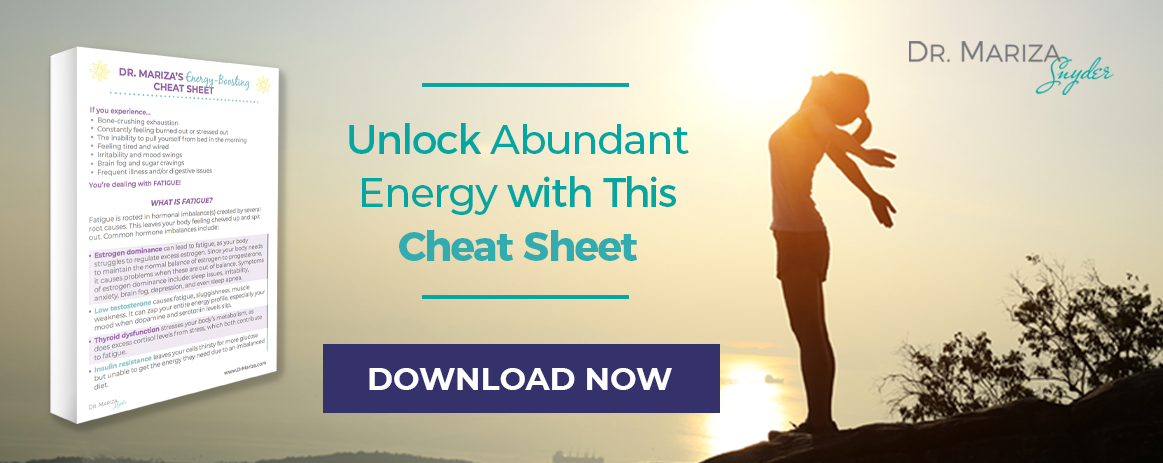
Free Download: Easy, Practical Tips to Get More Energy!

Download the free Energy-Boosting Cheat Sheet now to learn how to unlock abundant health and energy that lasts—in only seconds every day!
Read More
EP 759

759: Tired, Wired & Inflamed? The Sleep Fix Most Women Are Missing with Dr. Michael Breus

Listen to the Episode Here

Or, listen on your favorite app: iTunes (Apple Podcasts) | Stitcher | Spotify | Pocketcasts

Episode Summary

Why do so many women suddenly start waking up at 3:00 a.m. during perimenopause?

In this practical and science-backed conversation, Dr. Mariza sits down with renowned sleep specialist Dr. Michael Breus to unpack why sleep changes so dramatically during perimenopause and menopause, and what women can do to finally get restorative sleep again.

Dr. Breus explains how fluctuating estrogen, progesterone, melatonin, cortisol, body temperature, and blood sugar all collide during midlife, creating the perfect storm for middle-of-the-night awakenings. He shares why waking up at 3:00 a.m. is incredibly common, how modern habits often make it worse, and why women need a layered approach instead of relying on a single solution.

Together, they discuss everything from sleep apnea, hormone replacement therapy, alcohol, caffeine, blood sugar, and evening routines to cognitive behavioral therapy for insomnia (CBT-I), breathwork, thermoregulation, and supplementation.

Most importantly, Dr. Breus offers practical strategies women can begin implementing immediately to improve sleep quality, reduce nighttime wakeups, and build a foundation for better health through every stage of menopause.

If you’ve been lying awake at 3:00 a.m. wondering what’s happening to your body, this episode is packed with answers and actionable solutions.

DR. MICHAEL BREUS

Dr. Michael Breus is a board-certified clinical psychologist, clinical sleep specialist, bestselling author, and founder of The Sleep Doctor. For more than two decades, he has helped millions of people improve their sleep through science-backed strategies focused on circadian rhythms, sleep disorders, behavioral sleep medicine, and overall wellness. He is the author of multiple bestselling books, including Sleep, Drink, Breathe.

IN THIS EPISODE

  1. Why women commonly wake up around 3:00 a.m. during perimenopause
  2. How estrogen, progesterone, cortisol, and blood sugar affect sleep
  3. The biggest mistakes women make before bedtime
  4. Why sleep apnea is often overlooked in midlife women
  5. How CBT-I can help retrain the brain for better sleep
  6. The role of caffeine, alcohol, fiber, and evening nutrition
  7. Why cooling the body improves sleep quality
  8. Practical habits that create a healthier nighttime routine

QUOTES

“Everything we do, we do better with a good night’s sleep.”

“Sleep is the currency of attention.”

“You need runway to land the plane.”

RESOURCES MENTIONED

Order my newest book: The Perimenopause Revolution

Get the “Sleep Drink Breathe: Simple Daily Habits for Profound Long-Term Health” book by Dr. Michael Breus. 

Take the Chronoquiz now

Get the Home Sleep Study – The at-home sleep study measures key sleep metrics

The Sleep Doctor Website

The Sleep Doctor Instagram

The Sleep Doctor Youtube

RELATED EPISODES 

758: Why Your Body Can’t Heal Until It Feels Safe: The Nervous System Shift That Changes Everything with Dr. Dave Rabin

757: The Hidden Emotional Shift of Perimenopause (No One Prepared Us For) with Dr. Melinda Ring

756: What Low-Grade Inflammation Is Really Doing to Your Hormones, Brain & Metabolism with Dr. Mariza

755: What If Your Body Isn’t Broken, Just Undernourished? The Missing Link Between Nutrients, Hormones & Energy with Ryan Woodburry

Free Download: Easy, Practical Tips to Get More Energy!

Download the free Energy-Boosting Cheat Sheet now to learn how to unlock abundant health and energy that lasts—in only seconds every day!
Read More
Essentially-You-podcast-bonus-ep-Dr-Mariza-Snyder-sq

758: Why Your Body Can’t Heal Until It Feels Safe: The Nervous System Shift That Changes Everything with Dr. Dave Rabin

Listen to the Episode Here

Or, listen on your favorite app: iTunes (Apple Podcasts) | Stitcher | Spotify | Pocketcasts

Episode Summary

What if the reason you’re feeling anxious, overwhelmed, exhausted, disconnected, or stuck isn’t because you’re broken—but because your nervous system no longer feels safe?

In this powerful conversation, Dr. Mariza sits down with psychiatrist, neuroscientist, inventor, and author Dr. Dave Rabin to explore the science of safety, nervous system regulation, emotional healing, resilience, and what it truly means to be alive.

Drawing from decades of work treating patients with PTSD, anxiety, addiction, and chronic stress, Dr. Rabin shares why many traditional mental health approaches often fall short and why healing begins by helping the body relearn safety.

Together, they discuss how modern life, chronic overstimulation, smartphones, loneliness, and constant stress have created what Dr. Rabin calls a “habitat crisis” that is overwhelming our nervous systems and contributing to rising rates of anxiety, depression, burnout, and chronic disease.

Dr. Rabin also explains why feeling must come before thinking, how many of our limiting beliefs become subconscious programs during childhood, and how simple practices can help rewrite those stories in real time.

The conversation dives into heart rate variability (HRV), vagus nerve health, emotional processing, play, connection, and the remarkable science behind Apollo Neuro—a wearable technology designed to help the body feel safer, sleep better, and recover more effectively from stress.

If you’ve ever felt trapped in survival mode, disconnected from joy, or exhausted from constantly pushing through, this episode offers a hopeful roadmap back to safety, resilience, and healing.

Dr. Dave Rabin

Dr. Dave Rabin is a board-certified psychiatrist, neuroscientist, inventor, and mental health innovator. He is the co-founder of Apollo Neuro, a wearable technology designed to improve stress resilience, sleep, focus, and recovery through gentle vibrations that activate the body’s safety response system. He is also the author of A Simple Guide to Being Alive, which explores the neuroscience of safety, healing, emotional well-being, and human flourishing.

IN THIS EPISODE

  • Why nervous system dysregulation is driving so many modern health challenges
  • How chronic stress, smartphones, and overstimulation contribute to a “habitat crisis”
  • Why feeling emotions is essential for healing and resilience
  • How subconscious childhood programming shapes adult behavior and beliefs
  • The connection between vagus nerve function, HRV, and long-term health
  • Why sleep quality may be one of the most powerful tools for nervous system recovery
  • The science behind Apollo Neuro and how it supports safety and resilience
  • How play, connection, and joy help create lasting healing

QUOTES

“Feeling is required for healing.”

“Pleasure and joy remind us that we are safe.”

“We all have the ability to heal ourselves.”

RESOURCES MENTIONED

Use code ENERGIZED and get 30% off on your first BATCH order

Get the “A Simple Guide to Being Alive” book by Dr. Dave Rabin now

Apollo Neuro Website

The Board of Medicine

Dr. Dave Rabin Instagram

Dr. Dave Rabin Facebook

RELATED EPISODES 

756: What Low-Grade Inflammation Is Really Doing to Your Hormones, Brain & Metabolism with Dr. Mariza

753: The Brain’s Hidden Role in Chronic Pain, Migraines & Fatigue with Dr. Howard Schubiner

754: How to Find Joy When Life Doesn’t Go According to Plan with Amberly Lago

717: “I Don’t Feel Like Myself Anymore”: The Mental & Emotional Reality of Perimenopause

Free Download: Easy, Practical Tips to Get More Energy!

Download the free Energy-Boosting Cheat Sheet now to learn how to unlock abundant health and energy that lasts—in only seconds every day!
Read More
EP 757

757: The Hidden Emotional Shift of Perimenopause (No One Prepared Us For) with Dr. Melinda Ring

Listen to the Episode Here

Or, listen on your favorite app: iTunes (Apple Podcasts) | Stitcher | Spotify | Pocketcasts

Episode Summary

Why do so many women enter perimenopause feeling like the rug has been pulled out from under them?

In this powerful conversation, Dr. Mariza sits down with integrative medicine physician and menopause expert Dr. Melinda Ring to explore why perimenopause often feels so destabilizing and why so many women feel blindsided by symptoms they were never warned about.

Together, they unpack the profound neuroendocrine changes happening during the perimenopause transition and why symptoms like sleep disruption, anxiety, brain fog, overwhelm, stress sensitivity, and feeling “not like yourself” often become some of the earliest signs that something is shifting.

Dr. Ring explains the critical connection between hormones, the stress response system, sleep quality, nervous system regulation, and long-term health outcomes. They also discuss why traditional medical approaches have historically fallen short for women, the growing role of hormone replacement therapy, and why individualized care matters more than ever.

The conversation dives deep into HPA axis dysfunction, trauma, chronic stress, self-compassion, resilience, and the importance of helping women feel safe in their bodies during a time of tremendous change.

If you’ve ever wondered whether what you’re experiencing is normal—or if you’ve found yourself saying, “I don’t feel like myself anymore”—this episode offers both validation and practical guidance.

Dr. Melinda Ring

Dr. Melinda Ring is a board-certified physician, integrative medicine expert, educator, and internationally recognized leader in women’s health and menopause care. She serves as Director of the Osher Center for Integrative Health and is passionate about helping women navigate perimenopause and menopause through evidence-based, whole-person care that addresses hormones, lifestyle, stress, sleep, and long-term health optimization.

IN THIS EPISODE

  • Why perimenopause often feels so overwhelming and unexpected
  • The connection between sleep disruption, hormones, and brain health
  • Why many women feel like they “don’t feel like themselves” anymore
  • The role of HPA axis dysfunction and chronic stress during midlife
  • How trauma and long-term stress influence the menopause transition
  • The evolving conversation around hormone replacement therapy
  • Why individualized hormone care matters more than one-size-fits-all protocols
  • How women can build resilience, safety, and self-compassion during perimenopause

QUOTES

“Sleep is the force multiplier.”

“You can’t heal in survival mode.”

“The brain is reorganizing, not just the ovaries.”

RESOURCES MENTIONED

Use code ENERGIZED and get 10% off on your Troscription Order

Sign Up Now for the “Advanced Integrative Menopause Care for Clinicians” Course Training with Dr. Melinda

Dr. Melinda Website

Dr. Melinda Instagram

Dr. Melinda Facebook

Dr. Melinda Tiktok

Dr. Melinda Youtube

RELATED EPISODES 

756: What Low-Grade Inflammation Is Really Doing to Your Hormones, Brain & Metabolism with Dr. Mariza

755: What If Your Body Isn’t Broken, Just Undernourished? The Missing Link Between Nutrients, Hormones & Energy with Ryan Woodburry

754: How to Find Joy When Life Doesn’t Go According to Plan with Amberly Lago

717: “I Don’t Feel Like Myself Anymore”: The Mental & Emotional Reality of Perimenopause

Free Download: Easy, Practical Tips to Get More Energy!

Download the free Energy-Boosting Cheat Sheet now to learn how to unlock abundant health and energy that lasts—in only seconds every day!
Read More
EP 756 (1)

756: What Low-Grade Inflammation Is Really Doing to Your Hormones, Brain & Metabolism with Dr. Mariza

Listen to the Episode Here

Or, listen on your favorite app: iTunes (Apple Podcasts) | Stitcher | Spotify | Pocketcasts

Episode Summary

What if inflammation is the missing link behind so many of the symptoms women experience after 40?

In this solo episode, Dr. Mariza breaks down the powerful connection between low-grade chronic inflammation, metabolic dysfunction, hormone changes, brain health, energy production, and accelerated aging. She explains why inflammation is far more than an immune system issue and how it silently influences nearly every aspect of health during perimenopause and menopause.

Many women assume that fatigue, brain fog, stubborn belly fat, poor sleep, anxiety, joint pain, cravings, and declining energy are separate issues requiring separate solutions. But Dr. Mariza reveals how these symptoms are often interconnected through one common underlying process: inflammation.

She also explores why perimenopause is not simply a hormone transition but a metabolic, vascular, and neuroendocrine transition that increases inflammatory burden and changes how the body responds to stress, blood sugar fluctuations, sleep disruption, and hormonal shifts.

Most importantly, Dr. Mariza shares the practical lifestyle pillars she uses to lower inflammation, improve metabolic flexibility, support hormone health, and create the internal environment needed for healthy aging and long-term vitality.

If you’ve been feeling like your body is changing but can’t quite connect the dots, this episode will help you understand what inflammation may be trying to tell you.

IN THIS EPISODE

  • Why low-grade inflammation is one of the biggest drivers of symptoms after 40
  • The connection between inflammation, metabolism, hormones, and aging
  • How perimenopause increases inflammatory burden throughout the body
  • The labs Dr. Mariza recommends to assess inflammation and metabolic health
  • Why blood sugar regulation is one of the fastest ways to lower inflammation
  • The critical role of muscle, movement, sleep, and nervous system regulation
  • How gut health influences inflammation, immunity, and metabolism
  • Practical daily habits that help reduce inflammation and support healthy aging

QUOTES

“The goal isn’t simply to lose weight. The goal is creating an internal environment where the body no longer feels the need to stay inflamed.”

“One workout cannot undo eight hours of sitting.”

“When inflammation comes down, everything goes up.”

RESOURCES MENTIONED

Use code ENERGIZED and get 10% off on your MitoQ Order

Fix Your Metabolism Masterclass

Order my newest book: The Perimenopause Revolution

Joi & Blokes Lab Testing

Blood Sugar Hacks Guide

RELATED EPISODES 

755: What If Your Body Isn’t Broken, Just Undernourished? The Missing Link Between Nutrients, Hormones & Energy with Ryan Woodburry

753: The Brain’s Hidden Role in Chronic Pain, Migraines & Fatigue with Dr. Howard Schubiner

751: Bloating, Brain Fog & Hormone Chaos? Your Gut May Be the Root Cause with Dr. Cassie Smith

741: Estrogen, Gut Health, Mitochondria, and Cardiovascular Health: What Changes In Perimenopause with Dr. Siobhan Mitchel

Free Download: Easy, Practical Tips to Get More Energy!

Download the free Energy-Boosting Cheat Sheet now to learn how to unlock abundant health and energy that lasts—in only seconds every day!
Read More