
Tag Archives | Brain Fog

EP 778

778: The Fatigue Problem No One Is Solving for Women Over 40 (And The Labs I Order First)

Listen to the Episode Here

Or, listen on your favorite app: iTunes (Apple Podcasts) | Stitcher | Spotify | Pocketcasts

Episode Summary

You’re exhausted by 2 or 3 PM. Your workouts suddenly wipe you out. Your hair is shedding, your brain feels foggy, and even climbing a flight of stairs leaves you more winded than it used to.

Then you finally ask for help and hear: “Your labs are normal.”

In this solo episode, Dr. Mariza breaks down one of the most commonly missed contributors to persistent fatigue in women: iron deficiency, even before anemia develops. She explains newly released American Society of Hematology ferritin thresholds and why women who were previously told their iron was “normal” may deserve a closer look.

But iron is only one part of the conversation.

Dr. Mariza walks through the bigger clinical picture she considers when a woman says, “I don’t feel like myself anymore,” including thyroid function, mitochondrial energy production, blood sugar, sleep, nutrition, stress physiology, and HPA-axis regulation.

Most importantly, she explains why fatigue is a symptom, not a diagnosis and why neither stress, aging, nor perimenopause should automatically become the explanation for everything you’re experiencing.

Listen now to learn what may be hiding behind your exhaustion and how to have a more productive conversation with your healthcare provider.

IN THIS EPISODE

  1. Why iron deficiency can exist before you become anemic
  2. The new ferritin thresholds women should know about
  3. Why a lab’s reference range and a diagnostic threshold are not always the same thing
  4. Why heavy perimenopausal periods can increase your risk of depleted iron stores
  5. The fatigue, brain fog, headaches, hair shedding, and exercise intolerance that can overlap with perimenopause
  6. How iron, thyroid hormones, nutrition, blood sugar, sleep, and recovery influence mitochondrial energy production
  7. Why “adrenal fatigue” oversimplifies what may actually be happening with the HPA axis
  8. How under-fueling, over-training, poor sleep, circadian disruption, illness, and caffeine can add to the body’s total stress load
  9. The questions to ask when you know something has changed but your labs keep coming back “normal”

QUOTES

“You can be iron deficient before you ever become anemic.”

“Two things can be true at once.”

“I don’t want mitochondrial dysfunction to become another vague label we give an exhausted woman.”

RESOURCES MENTIONED

Find inspiration, connection, and meaningful reads. Join the Book Club now!

Order my newest book: The Perimenopause Revolution

Stop surviving and start thriving, join Midlife on Fire Collective now

RELATED EPISODES 

769: Is It Perimenopause or Something Else? How to Finally Connect the Dots with Dr. Mariza

664: The Hidden Reason You’re Exhausted: How to Fix Cortisol and Boost Stress Resilience in Perimenopause

661: When “Normal” Isn’t Normal: How to Be Heard (and Taken Seriously) at the Doctor’s Office

755: What If Your Body Isn’t Broken, Just Undernourished? The Missing Link Between Nutrients, Hormones & Energy with Ryan Woodbury

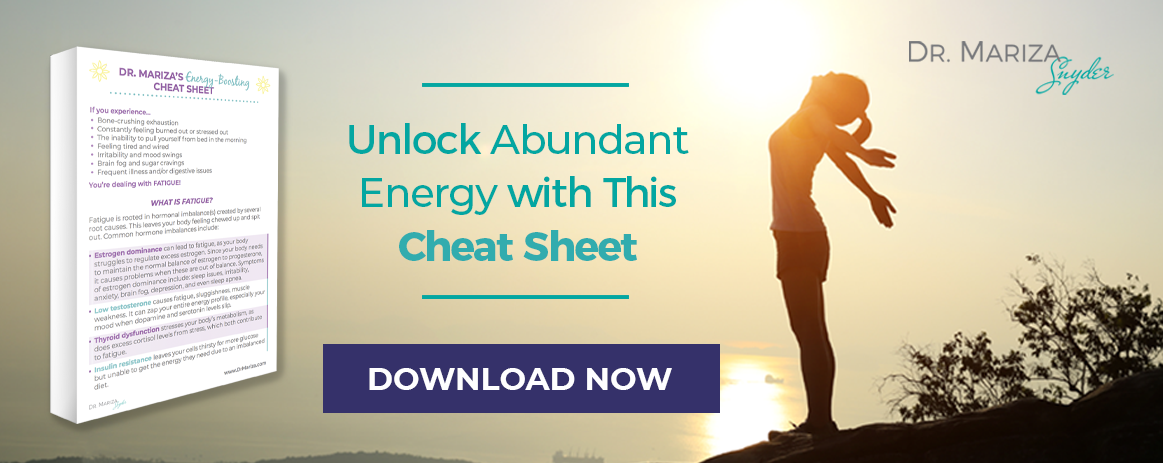
Free Download: Easy, Practical Tips to Get More Energy!

Download the free Energy-Boosting Cheat Sheet now to learn how to unlock abundant health and energy that lasts—in only seconds every day!
Read More
EP 751

751: Bloating, Brain Fog & Hormone Chaos? Your Gut May Be the Root Cause with Dr. Cassie Smith

Listen to the Episode Here

Or, listen on your favorite app: iTunes (Apple Podcasts) | Stitcher | Spotify | Pocketcasts

Episode Summary

“What if your bloating, fatigue, brain fog, anxiety, stubborn weight gain, and hormone symptoms are actually starting in your gut?”

In this episode, Dr. Mariza sits down with Dr. Cassie Smith — dual board-certified endocrinologist, founder of Modern Endocrine, and author of Fix Your Gut, Fix Your Hormones — to unpack the powerful connection between gut health, hormone balance, stress, metabolism, inflammation, and reproductive health.

Together, they dive into how chronic stress, poor gut health, blood sugar dysregulation, inflammation, and lifestyle overload silently impact everything from cortisol and insulin to estrogen, progesterone, thyroid function, and fertility.

Dr. Cassie explains why so many women are told their labs are “normal” while still feeling exhausted, bloated, anxious, inflamed, and disconnected from their bodies — and why gut dysfunction is often the missing piece conventional medicine overlooks.

They also explore the growing metabolic and hormonal crisis happening in younger women, the connection between PCOS, insulin resistance, gut dysfunction, and birth control, and why many women are struggling to restore healthy cycles and fertility later in life.

This conversation is a powerful reminder that hormones do not work in isolation. Your gut, nervous system, metabolism, sleep, stress resilience, and hormones are all deeply interconnected.

If you’ve been feeling like your body is trying to tell you something but nobody has connected the dots yet, this episode will help you understand where healing truly begins.

DR. CASSIE SMITH

Dr. Cassie Smith is a dual board-certified endocrinologist and the founder of Modern Endocrine. After becoming frustrated with the limitations of conventional medicine, she built a practice focused on uncovering the root causes behind hormone dysfunction, metabolic issues, fertility struggles, and gut-related symptoms. She is also the author of the book Fix Your Gut, Fix Your Hormones.

IN THIS EPISODE

  1. Why chronic stress has such a powerful impact on gut health and hormones
  2. How gut dysfunction contributes to fatigue, brain fog, bloating, anxiety, and weight resistance
  3. The connection between estrogen decline, microbiome diversity, and inflammation
  4. Why insulin resistance and metabolic dysfunction are rising in younger women
  5. The hidden relationship between PCOS, gut health, cortisol, and fertility
  6. Why birth control is often used as a Band-Aid instead of addressing root causes
  7. The foundational lifestyle habits that support gut and hormone healing
  8. Why slowing down, resting, and reducing nervous system overload matters for recovery

QUOTES

“Your hormones are doing the best they can in the environment you give them.”

“It doesn’t matter how many supplements or hormones we throw at you if the foundations aren’t in place.”

“Your gut is where all healing begins.”

“Your body cannot heal in survival mode.”

RESOURCES MENTIONED

Get your “Fix Your Gut, Fix Your Hormones” Book by Dr. Cassie Smith

Order my newest book: The Perimenopause Revolution

Modern Endocrine Website

Modern Endocrine Instagram

Modern Endocrine Facebook

Modern Endocrine Tiktok

Modern Endocrine Youtube

Hormones, Metabolism and You Podcast

The Menopause Gut Book by Cynthia Thurlow

RELATED EPISODES 

741: Estrogen, Gut Health, Mitochondria, and Cardiovascular Health: What Changes In Perimenopause with Dr. Siobhan Mitchel

743: Why Your Heart Risk Changes in Menopause (And What You Can Do About It) with Dr. Jayne Morgan

738: The Hidden Link Between Inflammation, Hormones & Fertility with Dr. Natalie Crawford 

740: Why You’re Bloated, Gaining Weight & Feeling Off in Menopause (It Starts in Your Gut) with Cynthia Thurlow

Free Download: Easy, Practical Tips to Get More Energy!

Download the free Energy-Boosting Cheat Sheet now to learn how to unlock abundant health and energy that lasts—in only seconds every day!

Read More
EP 750 (1)

750: The Underlying Cellular Cause of Midlife Fatigue, Brain Fog & Low Motivation with Andrew Salzman

Listen to the Episode Here

Or, listen on your favorite app: iTunes (Apple Podcasts) | Stitcher | Spotify | Pocketcasts

Episode Summary

“What if the exhaustion, brain fog, low libido, and metabolic changes women experience in midlife are actually rooted in a deeper cellular energy crisis?”

In this episode, Dr. Mariza sits down with Dr. Andrew Salzman — physician, inventor, biochemical engineer, and Chief Scientific Officer of Wonderfeel — to unpack the powerful connection between NAD, mitochondrial health, inflammation, ovarian aging, gut integrity, nitric oxide, and the dramatic energy shifts women experience during perimenopause and menopause.

Dr. Salzman explains why menopause represents a major biological inflection point for women and how declining NAD levels may be contributing to fatigue, brain fog, poor recovery, metabolic dysfunction, sleep issues, reduced stress resilience, cardiovascular changes, and shifts in sexual health.

Together, they explore the evolutionary role of menopause, why ovarian senescence accelerates aging pathways, how inflammation and the enzyme CD38 rapidly deplete NAD stores, and why the gut microbiome may be one of the biggest drivers of inflammation and energy decline in modern women.

They also dive into nitric oxide production, cardiovascular health, the brain’s dependence on NAD for sleep and cognitive function, and why ingredients like NMN and creatine are gaining attention for supporting healthy aging and resilience in midlife.

If you’ve ever looked in the mirror and thought, “I don’t feel like myself anymore,” this conversation will help connect the dots between your symptoms, your mitochondria, and your long-term vitality.

ANDREW SALZMAN

Dr. Andrew Salzman is a physician, inventor, biochemical engineer, and the Chief Scientific Officer of Wonderfeel. With more than 30 years of experience in drug discovery and development, over 170 scientific publications, and more than 50 patents, Dr. Salzman has spent decades studying aging biology, inflammation, cellular resilience, nitric oxide signaling, and mitochondrial health

IN THIS EPISODE

  1. Why menopause is a major biological inflection point for women
  2. How declining NAD levels impact energy, metabolism, sleep, and brain function
  3. Why CD38 accelerates inflammation and NAD depletion during aging
  4. The surprising connection between gut health, inflammation, and menopause symptoms
  5. How estrogen decline contributes to leaky gut and systemic inflammation
  6. Why nitric oxide is essential for circulation, libido, cardiovascular health, and cognition
  7. The role of NAD in circadian rhythm, sleep quality, and stress resilience
  8. Why NMN and creatine are gaining attention for healthy aging and vitality

QUOTES

“Menopause will happen, but the question is: how do we maintain vibrancy and resilience through it?”

“NAD is the common currency that drives energy throughout the body.”

“The gut is the foundational driver of inflammation as we age.”

“Without NADPH, you don’t have nitric oxide production.”

RESOURCES MENTIONED

Subscribe and Save $15 on Wonderfeel Youngr™ NMN

Use code ENERGIZED and get 30% off on your first BATCH order

Order my newest book: The Perimenopause Revolution

Wonderfeel Website

Wonderfeel Instagram

Wonderfeel YouTube

RELATED EPISODES 

741: Estrogen, Gut Health, Mitochondria, and Cardiovascular Health: What Changes In Perimenopause with Dr. Siobhan Mitchel

691: The Fertility Crisis No One Talks About: Why Your Health Today Impacts Future Generations with Dr. Ann Shippy

717: “I Don’t Feel Like Myself Anymore”: The Mental & Emotional Reality of Perimenopause

743: Why Your Heart Risk Changes in Menopause (And What You Can Do About It) with Dr. Jayne Morgan

Free Download: Easy, Practical Tips to Get More Energy!

Download the free Energy-Boosting Cheat Sheet now to learn how to unlock abundant health and energy that lasts—in only seconds every day!

Read More
EP 744 (1)

744: The Midlife Brain Reset: How to Protect Your Memory, Focus, and Mental Sharpness Starting Now

Listen to the Episode Here

Or, listen on your favorite app: iTunes (Apple Podcasts) | Stitcher | Spotify | Pocketcasts

Episode Summary

“Is this brain fog… or something more?”

In this solo episode, Dr. Mariza unpacks the hidden neurological and metabolic shifts happening during perimenopause and menopause—and why so many women suddenly feel mentally “off.”

From brain fog and memory lapses to anxiety, overwhelm, and lower stress resilience, these symptoms are often dismissed as aging or stress. But Dr. Mariza explains that this is actually a neuroendocrine and metabolic transition driven by changing hormones, brain energy shifts, inflammation, and blood sugar instability.

She breaks down what’s really happening inside the female brain during midlife, why women feel more sensitive to stress, and the most powerful lifestyle strategies to support long-term brain health, energy, mood, and resilience.

If you’ve been wondering why you don’t quite feel like yourself anymore, this episode will help connect the dots—and give you a roadmap forward.

IN THIS EPISODE

  1. Why perimenopause is a neuroendocrine and metabolic brain transition
  2. The connection between estrogen, brain energy, and brain fog
  3. How blood sugar instability worsens anxiety, fatigue, and mood swings
  4. Why inflammation and chronic stress hit harder in midlife
  5. The critical role of sleep, nervous system regulation, and muscle building
  6. The best supplements for brain health, stress resilience, and energy support
  7. Why tracking biomarkers and HRV can help protect long-term brain health

QUOTES

“Stabilizing your blood sugar is the fastest way to reclaim your energy, your focus, and your calm.”

“What we’re dealing with is an energy problem—and once you see it that way, everything changes.”

“Your brain is not broken. It is adapting and recalibrating.”

RESOURCES MENTIONED

Order my new book: The Perimenopause Revolution

Learn more about Joi & Blokes 

Explore Berkeley Life Nitric Oxide Support

Download the Midlife Lab Guide

RELATED EPISODES 

728: Why Brain Fog Isn’t Random: The Hormone Shift Behind It

743: Why Your Heart Risk Changes in Menopause with Dr. Jayne Morgan

693: Tired All the Time? It Might Be Hidden Problems With Your Mitochondria with Siobhan Mitchell

717: “I Don’t Feel Like Myself Anymore”: The Mental & Emotional Reality of Perimenopause

Free Download: Easy, Practical Tips to Get More Energy!

Download the free Energy-Boosting Cheat Sheet now to learn how to unlock abundant health and energy that lasts—in only seconds every day!

Read More
EP728-Why-Brain-Fog-Isn’t-Random--The-Hormone-Shift-Behind-It-Tuesday-Q&A

728: Why Brain Fog Isn’t Random: The Hormone Shift Behind It

Listen to the Episode Here

Or, listen on your favorite app: iTunes (Apple Podcasts) | Stitcher | Spotify | Pocketcasts

Episode Summary

Feeling like even the smallest things are suddenly overwhelming you? 

This is actually part of a much bigger hormonal and neurological shift happening beneath the surface. 

In today’s episode, I’m covering one of the most common—and least talked about—midlife experiences: the brain-related changes that come with perimenopause. 

Even women who experience few classic symptoms like hot flashes are still undergoing silent physiological changes affecting the brain, bones, muscles, metabolism, and cardiovascular health. 

We explore why perimenopause can be a destabilizing but deeply transformative recalibration where everything from hormones to lifestyle habits comes up for review. 

So I’m breaking down simple daily habits you can start right away to support your brain, stabilize your energy, and reduce overwhelm without adding more to your already full plate. 

Ready to clear the fog and feel like yourself again in midlife? Tune in here for the science-backed tools to start today. 🧠

IN THIS EPISODE

  1. The massive neuroendocrine shift happening in midlife
  2. What’s actually happening to the brain during perimenopause 
  3. Managing midlife inflammation and your immune system 
  4. The benefits of balancing your blood sugar and metabolism 
  5. How short bursts of activity can help you reclaim your energy 
  6. Honoring your circadian rhythm and prioritizing sleep 
  7. Why building strength and resilience in midlife is so important
  8. Managing your nervous system and avoiding cortisol spikes 
  9. How to join my FREE 7-day reset challenge to reignite your energy and metabolism! 

QUOTES

“Over 70% of women in perimenopause experience brain-related symptoms: mood changes, sleep disruptions, hot flashes, night sweats, anxiety, irritability, cognitive shifts, memory lapses, and low stress resilience. Eight out of the 10 most common symptoms in perimenopause are brain-related.”

“This is metabolic neuroscience, and this is exactly why we cannot just push through the brain fog. We need to stabilize glucose. We need to lower insulin spikes. We need a calm cortisol. We need to reduce the inflammatory load.” 

“These are the signals that we get to listen to, and that’s why I created something to help you decode those signals and give your body back what it has been asking for.”

RESOURCES MENTIONED

Discover my Morning Metabolic Ignition Method in my FREE 7-day Jumpstart Program HERE!

Order my newest book: The Perimenopause Revolution HERE! 

The Menopause Brain by Dr. Lisa Moscone

RELATED EPISODES 

721: No, It’s Not All in Your Head: The Medical Truth About Perimenopause with Dr. Jila Senemar

718: Low-Grade Inflammation: The Hidden Root of Fatigue, Brain Fog, and Hormone Imbalance with Dr. Shivani Gupta

717: “I Don’t Feel Like Myself Anymore”: The Mental & Emotional Reality of Perimenopause

701: Mood Swings, Brain Fog & Exhaustion: The Hormone Conversation You Deserve with Dr. Carrie Jones

690: The Perimenopause Revolution: Why midlife isn’t the end — it’s the beginning of your most energized, powerful, and vibrant self

Free Download: Easy, Practical Tips to Get More Energy!

Download the free Energy-Boosting Cheat Sheet now to learn how to unlock abundant health and energy that lasts—in only seconds every day!

Read More