Tag Archives | women

EP 783

783: Why Your Vaginal Health Changes After 40 (And What You’re Missing) with Wendy Strgar

Listen to the Episode Here

Or, listen on your favorite app: YouTube | iTunes (Apple Podcasts) | Spotify | Amazon Music | iHeartRadio | Pocketcasts

Episode Summary

Recurring UTIs. Vaginal dryness. Burning. Painful sex. BV that comes back again and again.

So many women are dealing with these symptoms, especially during perimenopause and menopause, yet vaginal health remains one of the least discussed areas of women’s healthcare.

In this episode, Dr. Mariza sits down with Good Clean Love founder Wendy Stragar for a candid conversation about the vaginal microbiome, what can disrupt it, and why declining estrogen can leave vaginal and urinary tissues more vulnerable to dryness, irritation, pain, and recurrent symptoms.

Wendy shares how her own experience with painful sex and severe irritation after pelvic surgery led her to begin investigating the ingredients in common personal care products and eventually build Good Clean Love.

They unpack the importance of vaginal pH, protective bacteria, the vaginal epithelial barrier, and why simply treating every recurrence as another yeast infection or prescribing the same medication repeatedly may not address what is actually happening.

They also explore what happens as estrogen declines, why symptoms can become especially severe after cancer treatment or chemical menopause, and why women deserve better language, education, testing, treatment options, and clinicians willing to take vaginal pain seriously.

Because vaginal discomfort, recurrent infections, painful sex, and dryness should never simply be dismissed as the inevitable price of getting older.

WENDY STRAGAR

Wendy Stragar is the founder of Good Clean Love, a women’s intimate and vaginal health company that grew out of her own search for products she could comfortably use after experiencing significant pain and irritation following childbirth and pelvic surgery.

Over the years, Wendy has focused her work on vaginal microbiome health, product formulation, education, clinical research, and expanding access to vaginal healthcare.

In this conversation, she shares what she has learned from working with researchers, clinicians, and women struggling with chronic vaginal symptoms and why she believes vaginal microbiome health deserves a much larger role in women’s healthcare.

IN THIS EPISODE

  1. How Wendy’s own experience with painful sex and irritation led to the creation of Good Clean Love
  2. Why the vaginal microbiome deserves the same attention we increasingly give the gut microbiome
  3. How declining estrogen can contribute to dryness, irritation, pain, and changes in vaginal and urinary health
  4. Why recurrent BV, yeast symptoms, and UTIs may require a deeper look at what organisms are actually present
  5. The role vaginal pH and the epithelial barrier play in maintaining a healthy vaginal environment
  6. Why some personal lubricants and vaginal products may aggravate already-sensitive tissue
  7. What women should know about vaginal changes during perimenopause, postpartum, and chemical menopause
  8. Why recurrent symptoms deserve more than another round of the same treatment
  9. How better language, testing, and access to knowledgeable clinicians could transform vaginal healthcare

QUOTES

“The problem is that you need to create the environment for that healthy bacteria to survive.”

“We like to say restore and maintain.”

“Quality of life after you go through something like that, we deserve that.”

RESOURCES MENTIONED

Find inspiration, connection, and meaningful reads. Join the Book Club now!

Use code DRMARIZA and get 10% off on your Womeness Order

Improve your Vaginal Health: Subscribe to Wendy Strgar Substack

Good Clean Love Clinic Website

Good Clean Love Pages

Good Clean Love Instagram

Wendy Strgar Instagram

RELATED EPISODES 

779: How Did We Get Hormones So Wrong? The HRT Story Every Woman Should Know with Dr. Louise Newson

769: Is It Perimenopause or Something Else? How to Finally Connect the Dots with Dr. Mariza

661: When “Normal” Isn’t Normal: How to Be Heard (and Taken Seriously) at the Doctor’s Office

572: How to Know You Are in Perimenopause Including the 40+ Symptoms Associated with Declining Hormones

Free Download: Easy, Practical Tips to Get More Energy!

Download the free Energy-Boosting Cheat Sheet now to learn how to unlock abundant health and energy that lasts—in only seconds every day!
Read More
EP 781

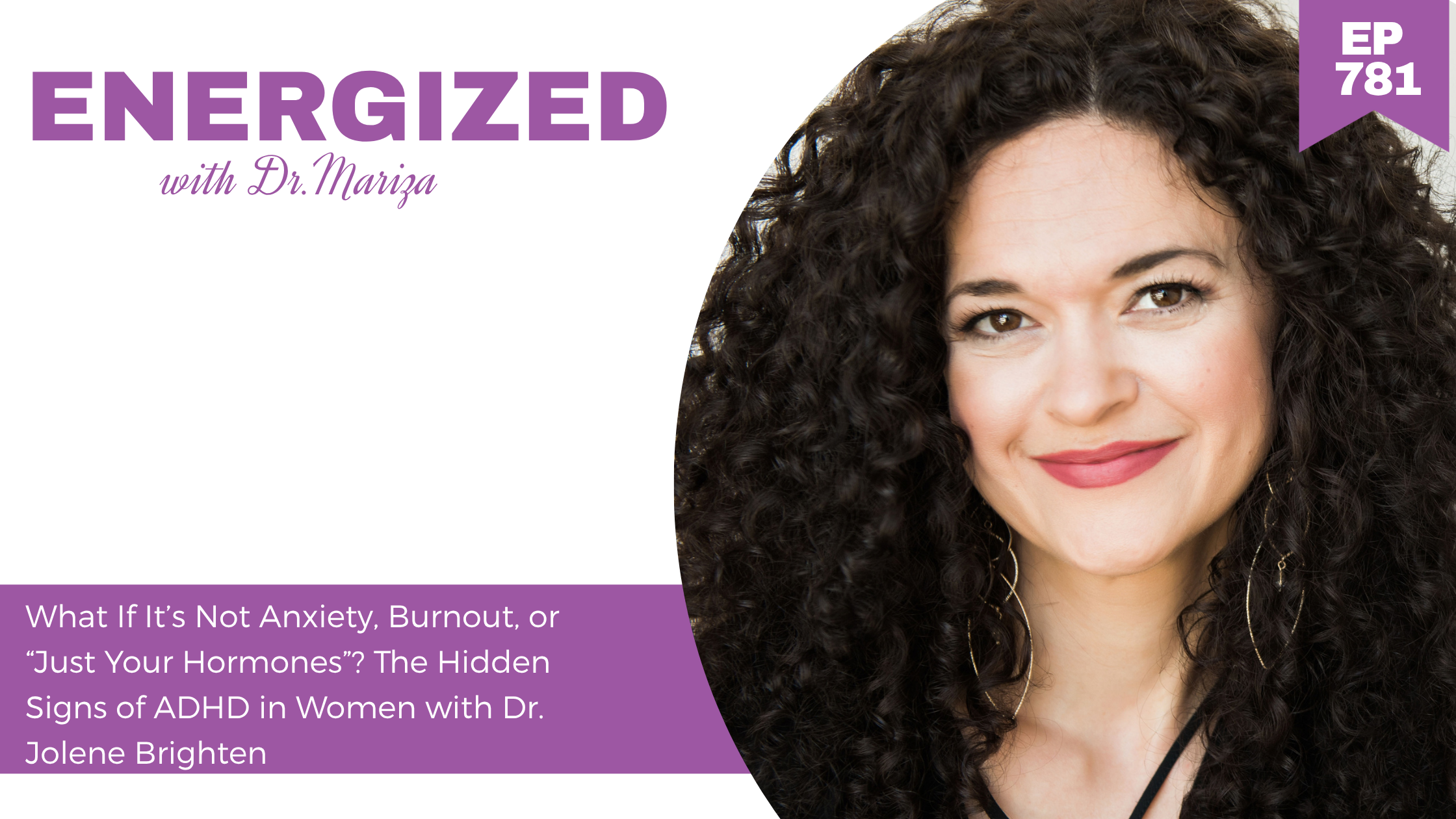
781: What If It’s Not Anxiety, Burnout, or “Just Your Hormones”? The Hidden Signs of ADHD in Women with Dr. Jolene Brighten

Listen to the Episode Here

Or, listen on your favorite app: YouTube | iTunes (Apple Podcasts) | Spotify | Amazon Music | iHeartRadio | Pocketcasts

Episode Summary

What if the brain fog, overwhelm, time blindness, racing thoughts, and shorter emotional fuse showing up in your 40s aren’t just perimenopause?

For many women, ADHD has been hiding in plain sight for decades.

In this episode, Dr. Mariza sits down with women’s hormone expert and author Dr. Jolene Brighten to unpack why ADHD looks so different in women, why so many girls learn to mask their symptoms, and why changing estrogen levels during perimenopause can make those coping strategies suddenly stop working.

Dr. Brighten explains how ADHD in women may look less like the stereotypical hyperactive child and more like people-pleasing, perfectionism, constantly running mental lists, interrupting because you’re afraid you’ll forget your thought, chronic overwhelm, and appearing completely put together while internally struggling.

They also dive into the fascinating overlap between ADHD, perimenopause, PMDD, sleep, mitochondrial function, glucose metabolism, neuroinflammation, and emotional regulation.

And perhaps most importantly, they discuss what women can actually do: how movement can support brain energy, why sleep matters so much for the ADHD brain, how to build habits that work with your executive function instead of against it, and exactly how to advocate for a proper evaluation when your concerns are dismissed.

Because if your brain suddenly feels harder to manage in midlife, there may be more going on than “just hormones.”

DR. JOLENE BRIGHTEN

Dr. Jolene Brighten is a board-certified naturopathic endocrinologist, women’s hormone expert, educator, and bestselling author whose work focuses on helping women better understand the relationship between their hormones, brain, and overall health.

Her newest book, ADHD and Women: A Guide to Optimizing Your Hormones and Thriving with ADHD, explores how female hormones can influence ADHD symptoms throughout puberty, the menstrual cycle, pregnancy, postpartum, and perimenopause.

In this conversation, Dr. Brighten brings both clinical expertise and personal experience to the complicated intersection of ADHD, hormonal transitions, PMDD, emotional regulation, sleep, and women finally receiving answers after decades of believing they simply needed to try harder.

IN THIS EPISODE

  1. Why ADHD in women can hide behind people-pleasing, perfectionism, and looking “high-functioning”
  2. How declining estrogen in perimenopause can make masking ADHD symptoms much harder
  3. Why girls with ADHD are often diagnosed with anxiety or depression instead
  4. The connection between ADHD, mitochondrial function, brain glucose metabolism, and neuroinflammation
  5. Why movement can temporarily improve focus and cognitive performance in the ADHD brain
  6. How sleep disruption can compound brain fog, emotional dysregulation, and ADHD symptoms
  7. Why ADHD and PMDD so often overlap and may worsen during perimenopause
  8. How hormones may influence impulsivity, mood, executive function, and premenstrual ADHD symptoms
  9. What to track and say to your doctor if you suspect ADHD but keep getting dismissed

QUOTES

“Build pleasure into your day.”

“It is not just a hormone story.”

“High functioning is the label that society puts on women so that they can feel comfortable asking for more from her.”

RESOURCES MENTIONED

Stop surviving and start thriving, join Midlife on Fire Collective now

Join my brand-new Substack: for the woman everyone depends on who is wondering why everything feels harder in midlife:

ADHD and Women by Dr. Jolene Brighten

Dr. Jolene Brighten Website

Dr. Jolene Brighten Substack

Dr. Jolene Brighten Instagram

RELATED EPISODES 

769: Is It Perimenopause or Something Else? How to Finally Connect the Dots with Dr. Mariza

763: Why So Many High-Functing and Achieving Women Miss the Signs of Hormone Imbalance with Anastasia Sartan

744: The Midlife Brain Reset: How to Protect Your Memory, Focus, and Mental Sharpness Starting Now

661: When “Normal” Isn’t Normal: How to Be Heard (and Taken Seriously) at the Doctor’s Office

Free Download: Easy, Practical Tips to Get More Energy!

Download the free Energy-Boosting Cheat Sheet now to learn how to unlock abundant health and energy that lasts—in only seconds every day!
Read More
EP 780

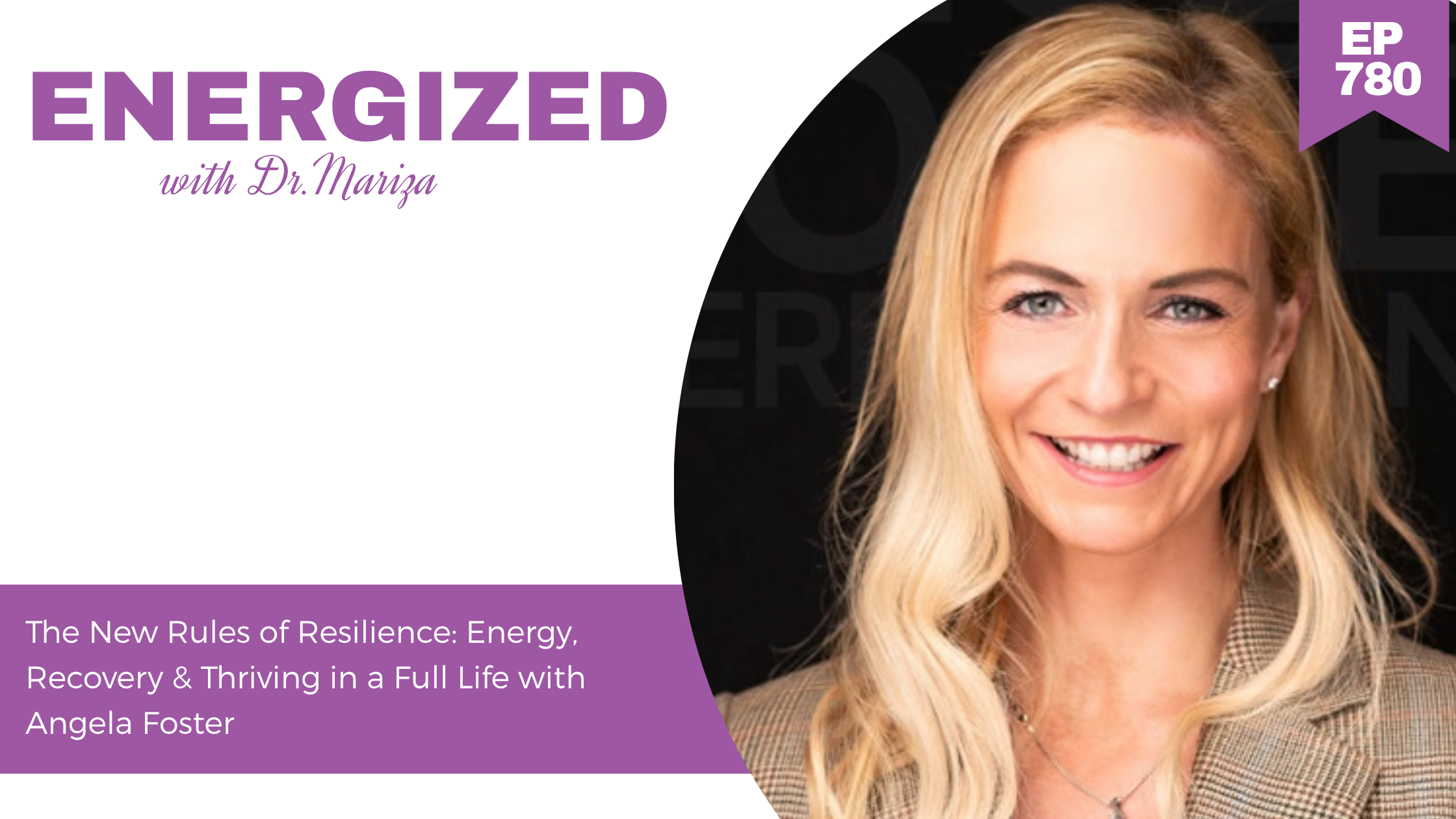
780: The New Rules of Resilience: Energy, Recovery & Thriving in a Full Life with Angela Foster

Listen to the Episode Here

Or, listen on your favorite app: iTunes (Apple Podcasts) | Stitcher | Spotify | Pocketcasts

Episode Summary

What if you’re not burned out?

You’re still working. Still exercising. Still taking care of your family. Still getting everything done.

From the outside, you look like you’re handling it all.

But underneath that competence, your body may be keeping a very different score through your sleep, recovery, energy, mood, stress tolerance, and heart rate variability.

In this episode, Dr. Mariza sits down with nutritionist, health and performance coach, and High Performance Health podcast host Angela Foster to unpack the difference between true resilience and simply becoming incredibly good at pushing through.

Angela explains why changing hormones in midlife can expose the cost of years of chronic under-recovery, how HRV can offer clues about whether your training and lifestyle actually match your capacity, and why the workout that once energized you may now leave you depleted for days.

They also share practical ways to build more recovery into a full life without abandoning your ambition, including walking, strength training, strategic HIIT, box breathing, the physiological sigh, morning light, intentional pauses, boundaries, and what Dr. Mariza calls “mindfulness snacks.”

Because the goal isn’t to build a smaller life.

It’s to build the energy, resilience, and capacity to keep living the big life you’ve worked so hard to create.

ANGELA FOSTER

Angela Foster is a nutritionist, health and performance coach, and host of the High Performance Health podcast. Her work focuses on helping ambitious women optimize their energy, hormones, resilience, and longevity without sacrificing the full lives they love.

Drawing from her own journey through major depressive disorder and perimenopause, Angela combines lifestyle medicine, exercise, recovery, nervous system regulation, and performance data such as HRV to help women understand their individual capacity and build greater resilience.

IN THIS EPISODE

  1. How to distinguish true resilience from simply getting really good at pushing through
  2. Why hormonal changes in midlife can expose years of chronic under-recovery
  3. How HRV can reveal whether your training load actually matches your recovery capacity
  4. Why HIIT may energize some women while leaving others depleted for days
  5. How walking, strength training, box breathing, and intentional recovery can support resilience
  6. Why small “mindfulness snacks” throughout the day can help regulate your nervous system
  7. What to investigate when you’re doing everything right but your HRV still isn’t improving
  8. How boundaries, asking for help, and taking things off your plate can actually expand your future capacity
  9. Why sustainable ambition doesn’t require giving up the career or life you’ve worked hard to build

QUOTES

“The biggest stress for us is when we don’t feel that sense of self-agency.”

“When you put intentional pauses into your day, you can slow that down and be present.”

“Where in your life can you put an anchor in your day that just grounds you back to what’s important?”

RESOURCES MENTIONED

Find inspiration, connection, and meaningful reads. Join the Book Club now!

Join my brand-new Substack: for the woman everyone depends on who is wondering why everything feels harder in midlife

High Performance Health Podcast

Angela Foster Website

Angela Foster Instagram

RELATED EPISODES 

772: The Cost of Holding It All Together: How Overfunctioning Changes Your Hormones, Brain & Metabolism with Dr. Mariza

776: What Changes When Your Body Can’t Keep Pushing Like It Used To? with Dr. Taz Bhatia

737: Why You Still Feel Off in Midlife (Even When You’re Doing Everything Right) with Dr. Melissa Sonners

758: Why Your Body Can’t Heal Until It Feels Safe: The Nervous System Shift That Changes Everything with Dr. Dave Rabin

Free Download: Easy, Practical Tips to Get More Energy!

Download the free Energy-Boosting Cheat Sheet now to learn how to unlock abundant health and energy that lasts—in only seconds every day!
Read More
EP 779

779: How Did We Get Hormones So Wrong? The HRT Story Every Woman Should Know with Dr. Louise Newson

Listen to the Episode Here

Or, listen on your favorite app: iTunes (Apple Podcasts) | Stitcher | Spotify | Pocketcasts

Episode Summary

How did hormones become something women were taught to fear?

For decades, hormone therapy has been surrounded by confusion, conflicting recommendations, and sweeping assumptions that lump very different hormones and formulations together. Meanwhile, women continue walking into doctors’ offices saying, “I don’t feel like myself anymore,” and too often leave without answers or options.

In this episode, Dr. Mariza sits down in London with physician, women’s hormone specialist, educator, bestselling author, and advocate Dr. Louise Newson for a powerful conversation about how women’s hormone care got here and what needs to change.

They unpack why menopause has been reduced to hot flashes and night sweats, why estrogen, progesterone, and testosterone need far more nuance, and why Dr. Newson believes hormones deserve a place in the conversation about long-term health, not simply symptom relief.

They also go deep into one of the most controversial areas of women’s hormone care: testosterone, why the conversation so often begins and ends with libido, and what Dr. Newson has observed in women taking it for broader symptoms.

Most importantly, this episode is about informed choice: giving women accurate information, acknowledging where evidence is strong or still evolving, and creating healthcare relationships where women can participate fully in decisions about their own bodies.

DR. LOUISE NEWSON

Dr. Louise Newson is a physician, women’s hormone specialist, educator, bestselling author, and advocate working to transform the way women understand and access hormone care.

Her newest book, The Power of Hormones, explores the history of estrogen, progesterone, testosterone, hormone therapy, inflammation, and the medical decisions that have shaped women’s healthcare. Dr. Newson also focuses heavily on helping women understand their options and participate more actively in decisions about their health.

IN THIS EPISODE

  1. Why menopause and hormone loss need to be viewed as more than hot flashes and night sweats
  2. How decades of medical history shaped today’s fear and confusion around hormone therapy
  3. Why lifestyle and hormone therapy should not be treated as an either-or decision
  4. The controversy around testosterone for women and why the conversation extends beyond libido
  5. Why the specific hormone and formulation matter when discussing benefits and risks
  6. How hormone changes may influence metabolic health, inflammation, and healthy aging
  7. The differences Dr. Newson draws between bioidentical hormones and synthetic hormone formulations
  8. Why younger women with hormonal conditions such as PMDD deserve a deeper hormone conversation
  9. How women can use knowledge, evidence, and informed choice to advocate for better healthcare

QUOTES

“You can only decide when you’ve got knowledge.”

“It’s all about choice based on evidence and fact.”

“We really need to grow up and think we need to prevent disease.”

RESOURCES MENTIONED

Order my newest book: The Perimenopause Revolution

Stop surviving and start thriving, join Midlife on Fire Collective now

Join my brand-new Substack: for the woman everyone depends on who is wondering why everything feels harder in midlife:

Stop guessing, start testing. Explore Joi & Blokes personalized labs with code DRMARIZA.

Use code ENERGIZED and get 10% off on your MitoQ Order

The Power of Hormones by Dr. Louise Newson

Dr. Louise Newson Website

Dr. Louise Newson Instagram

RELATED EPISODES 

656: The Dangers Of NOT Prescribing Bioidentical HRT + Migraines, Testosterone and Mitigating Inflammation with Dr. Louise Newson

680: You Are Not Broken: Why Women Need Testosterone to Feel Strong, Sexy & Energized with Dr. Kelly Casperson

605: Breaking the HRT Confusion: The Truth Behind Hormone Replacement Therapy for Perimenopausal Women with Karen Martel

592: Menopause, HRT, and Breast Cancer + How to Advocate for Yourself with Dr. Suzanne Gilberg-Lenz

Free Download: Easy, Practical Tips to Get More Energy!

Download the free Energy-Boosting Cheat Sheet now to learn how to unlock abundant health and energy that lasts—in only seconds every day!
Read More
EP 778

778: The Fatigue Problem No One Is Solving for Women Over 40 (And The Labs I Order First)

Listen to the Episode Here

Or, listen on your favorite app: iTunes (Apple Podcasts) | Stitcher | Spotify | Pocketcasts

Episode Summary

You’re exhausted by 2 or 3 PM. Your workouts suddenly wipe you out. Your hair is shedding, your brain feels foggy, and even climbing a flight of stairs leaves you more winded than it used to.

Then you finally ask for help and hear: “Your labs are normal.”

In this solo episode, Dr. Mariza breaks down one of the most commonly missed contributors to persistent fatigue in women: iron deficiency, even before anemia develops. She explains newly released American Society of Hematology ferritin thresholds and why women who were previously told their iron was “normal” may deserve a closer look.

But iron is only one part of the conversation.

Dr. Mariza walks through the bigger clinical picture she considers when a woman says, “I don’t feel like myself anymore,” including thyroid function, mitochondrial energy production, blood sugar, sleep, nutrition, stress physiology, and HPA-axis regulation.

Most importantly, she explains why fatigue is a symptom, not a diagnosis and why neither stress, aging, nor perimenopause should automatically become the explanation for everything you’re experiencing.

Listen now to learn what may be hiding behind your exhaustion and how to have a more productive conversation with your healthcare provider.

IN THIS EPISODE

  1. Why iron deficiency can exist before you become anemic
  2. The new ferritin thresholds women should know about
  3. Why a lab’s reference range and a diagnostic threshold are not always the same thing
  4. Why heavy perimenopausal periods can increase your risk of depleted iron stores
  5. The fatigue, brain fog, headaches, hair shedding, and exercise intolerance that can overlap with perimenopause
  6. How iron, thyroid hormones, nutrition, blood sugar, sleep, and recovery influence mitochondrial energy production
  7. Why “adrenal fatigue” oversimplifies what may actually be happening with the HPA axis
  8. How under-fueling, over-training, poor sleep, circadian disruption, illness, and caffeine can add to the body’s total stress load
  9. The questions to ask when you know something has changed but your labs keep coming back “normal”

QUOTES

“You can be iron deficient before you ever become anemic.”

“Two things can be true at once.”

“I don’t want mitochondrial dysfunction to become another vague label we give an exhausted woman.”

RESOURCES MENTIONED

Find inspiration, connection, and meaningful reads. Join the Book Club now!

Order my newest book: The Perimenopause Revolution

Stop surviving and start thriving, join Midlife on Fire Collective now

RELATED EPISODES 

769: Is It Perimenopause or Something Else? How to Finally Connect the Dots with Dr. Mariza

664: The Hidden Reason You’re Exhausted: How to Fix Cortisol and Boost Stress Resilience in Perimenopause

661: When “Normal” Isn’t Normal: How to Be Heard (and Taken Seriously) at the Doctor’s Office

755: What If Your Body Isn’t Broken, Just Undernourished? The Missing Link Between Nutrients, Hormones & Energy with Ryan Woodbury

Free Download: Easy, Practical Tips to Get More Energy!

Download the free Energy-Boosting Cheat Sheet now to learn how to unlock abundant health and energy that lasts—in only seconds every day!
Read More