
Tag Archives | menopause

EP 786

786: Doing Everything Right for Your Hormones but Still Feel Terrible? Here’s What You’re Missing with Jessica Kane Berman

Listen to the Episode Here

Or, listen on your favorite app: YouTube | iTunes (Apple Podcasts) | Spotify | Amazon Music | iHeartRadio | Pocketcasts

Episode Summary

You’re eating more protein, taking your supplements, prioritizing sleep, working out, and managing your stress. Maybe you’ve even started HRT. And yet you’re still exhausted, your brain feels foggy, and none of it is making the difference you hoped for.

In this episode, Dr. Mariza sits down with Jessica Kane Berman, Co-Owner and Chief Brand Officer of BodyBio, to look past your hormone levels to the cells those hormones are trying to reach.

Jessica explains that hormones are messengers, and their message lands on the cell membrane. When that membrane is disrupted, even the right hormones, or the right HRT, can fall flat. And as women head toward menopause, they lose some of their ability to make the phospholipids that build those membranes from food.

They unpack what “leaky cells” are and how microplastics, heavy metals, and environmental toxins get inside, why the brain and the lining of the gut both depend on phosphatidylcholine (PC), and why so few women get enough phospholipids from their diet.

They also explore why fish oil may not be the answer it’s sold as, why a supplement’s quality and form decide whether it ever reaches your cells, the simple foundation Jessica would start with, and how the liver and bile flow fit in. Dr. Mariza also shares why BodyBio has been part of her own protocol since back-to-back concussions left her fighting to get her brain back.

Listen now to learn what your cells may be missing, and how to build a foundation that helps everything else you do for your hormones actually work.

JESSICA KANE BERMAN

Jessica Kane Berman is Co-Owner and Chief Brand Officer of BodyBio, the third-generation, family-owned cellular health company founded by her grandfather, Ed Kane. She leads BodyBio’s brand strategy, education, and global growth, translating the science of cell membranes, phospholipids, and mitochondrial health into practical steps people can use to feel their best.

BodyBio’s approach starts at the cell membrane, with phospholipids, essential fatty acids, and minerals that support how cells communicate, make energy, and clear toxins. Its products are trusted by more than 40,000 healthcare providers across the U.S. and U.K., and the company supports ongoing clinical research with institutions including the NIH.

In this conversation, Jessica shares her own hormonal history, from polycystic ovaries and being told she’d need Clomid and metformin to get pregnant, to three healthy babies and the shift she felt after her last pregnancy, and why she now looks at her hormones and her cells together.

IN THIS EPISODE

  1. Why the health of your cells matters as much as your hormone levels
  2. How a hormone’s message lands on the cell membrane, and why a disrupted membrane can leave HRT falling flat
  3. Why women lose some of their ability to make phospholipids from food as they head toward menopause
  4. What “leaky cells” are, and how microplastics, heavy metals, and environmental toxins get in
  5. Why phosphatidylcholine (PC) matters for brain health, mom brain, and the lining of your gut
  6. Why fish oil may not be giving your cells the fats they need, and better ways to get DHA
  7. How a supplement’s quality and form decide whether it ever reaches your cells
  8. The foundation Jessica would start with: healthy fats, minerals, and B vitamins
  9. How the liver, bile flow, and TUDCA help your body process hormones and clear toxins

QUOTES

“Hormones are messengers, essentially. And the message lands on the cell membrane.”

“Everything ties back into how it functions on a cellular level.”

“They’re not supplements. These are essential nutrients that we need.”

RESOURCES MENTIONED

Use code DRMARIZA for 20% off BodyBio Hormone Essentials: The Hormone Health Stack 

Find inspiration, connection, and meaningful reads. Join the Book Club now!

BodyBio Website

Jessica Kane Berman Instagram

BodyBio Instagram 

BodyBio TikTok 

BodyBio Facebook

RELATED EPISODES

779: How Did We Get Hormones So Wrong? The HRT Story Every Woman Should Know with Dr. Louise Newson

755: What If Your Body Isn’t Broken, Just Undernourished? The Missing Link Between Nutrients, Hormones & Energy with Ryan Woodburry

750: The Underlying Cellular Cause of Midlife Fatigue, Brain Fog & Low Motivation with Andrew Salzman

736: Why Women Over 40 Feel So Drained (The Mineral Deficiency No One Talks About) with Caroline Alan

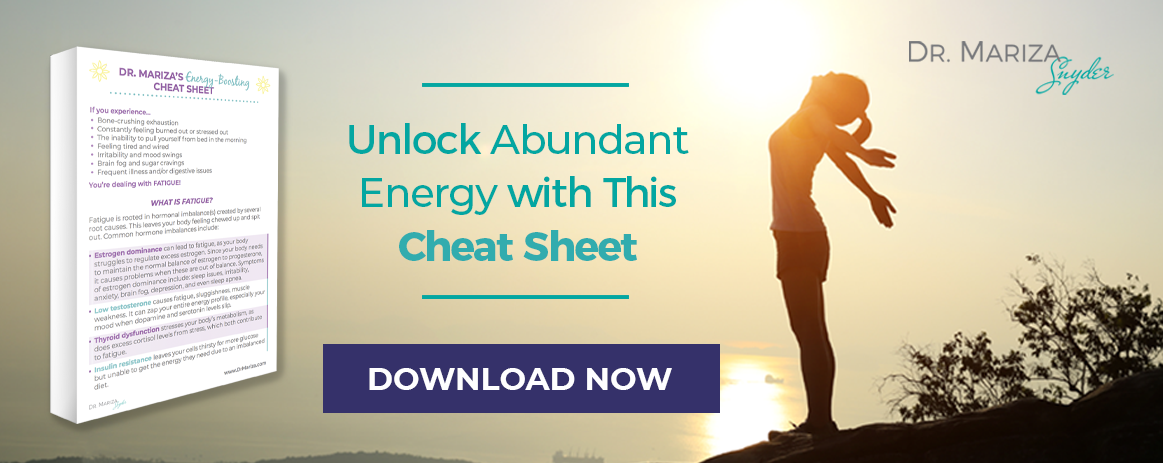
Free Download: Easy, Practical Tips to Get More Energy!

Download the free Energy-Boosting Cheat Sheet now to learn how to unlock abundant health and energy that lasts—in only seconds every day!
Read More
EP 779

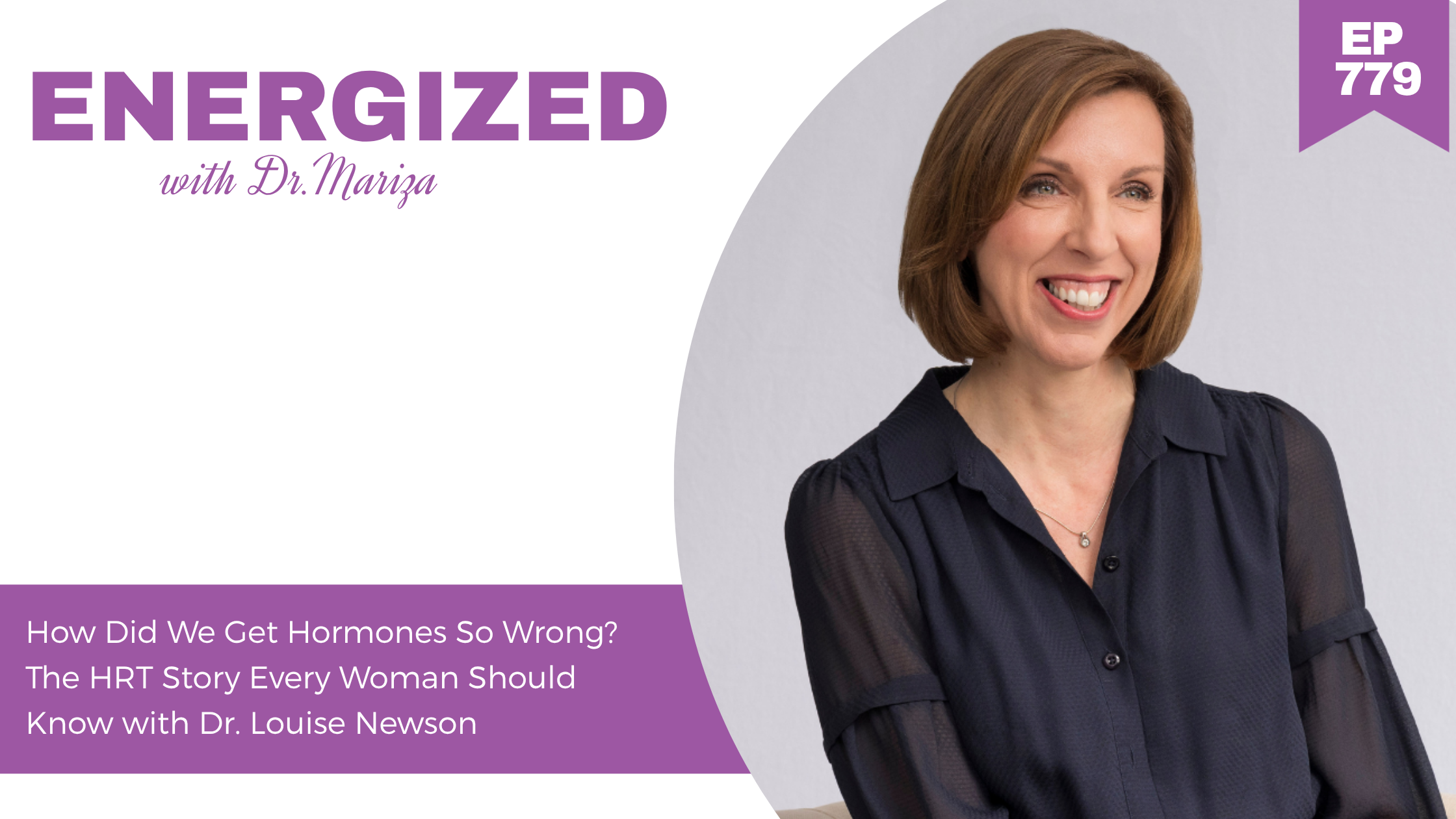
779: How Did We Get Hormones So Wrong? The HRT Story Every Woman Should Know with Dr. Louise Newson

Listen to the Episode Here

Or, listen on your favorite app: iTunes (Apple Podcasts) | Stitcher | Spotify | Pocketcasts

Episode Summary

How did hormones become something women were taught to fear?

For decades, hormone therapy has been surrounded by confusion, conflicting recommendations, and sweeping assumptions that lump very different hormones and formulations together. Meanwhile, women continue walking into doctors’ offices saying, “I don’t feel like myself anymore,” and too often leave without answers or options.

In this episode, Dr. Mariza sits down in London with physician, women’s hormone specialist, educator, bestselling author, and advocate Dr. Louise Newson for a powerful conversation about how women’s hormone care got here and what needs to change.

They unpack why menopause has been reduced to hot flashes and night sweats, why estrogen, progesterone, and testosterone need far more nuance, and why Dr. Newson believes hormones deserve a place in the conversation about long-term health, not simply symptom relief.

They also go deep into one of the most controversial areas of women’s hormone care: testosterone, why the conversation so often begins and ends with libido, and what Dr. Newson has observed in women taking it for broader symptoms.

Most importantly, this episode is about informed choice: giving women accurate information, acknowledging where evidence is strong or still evolving, and creating healthcare relationships where women can participate fully in decisions about their own bodies.

DR. LOUISE NEWSON

Dr. Louise Newson is a physician, women’s hormone specialist, educator, bestselling author, and advocate working to transform the way women understand and access hormone care.

Her newest book, The Power of Hormones, explores the history of estrogen, progesterone, testosterone, hormone therapy, inflammation, and the medical decisions that have shaped women’s healthcare. Dr. Newson also focuses heavily on helping women understand their options and participate more actively in decisions about their health.

IN THIS EPISODE

  1. Why menopause and hormone loss need to be viewed as more than hot flashes and night sweats
  2. How decades of medical history shaped today’s fear and confusion around hormone therapy
  3. Why lifestyle and hormone therapy should not be treated as an either-or decision
  4. The controversy around testosterone for women and why the conversation extends beyond libido
  5. Why the specific hormone and formulation matter when discussing benefits and risks
  6. How hormone changes may influence metabolic health, inflammation, and healthy aging
  7. The differences Dr. Newson draws between bioidentical hormones and synthetic hormone formulations
  8. Why younger women with hormonal conditions such as PMDD deserve a deeper hormone conversation
  9. How women can use knowledge, evidence, and informed choice to advocate for better healthcare

QUOTES

“You can only decide when you’ve got knowledge.”

“It’s all about choice based on evidence and fact.”

“We really need to grow up and think we need to prevent disease.”

RESOURCES MENTIONED

Order my newest book: The Perimenopause Revolution

Stop surviving and start thriving, join Midlife on Fire Collective now

Join my brand-new Substack: for the woman everyone depends on who is wondering why everything feels harder in midlife:

Stop guessing, start testing. Explore Joi & Blokes personalized labs with code DRMARIZA.

Use code ENERGIZED and get 10% off on your MitoQ Order

The Power of Hormones by Dr. Louise Newson

Dr. Louise Newson Website

Dr. Louise Newson Instagram

RELATED EPISODES 

656: The Dangers Of NOT Prescribing Bioidentical HRT + Migraines, Testosterone and Mitigating Inflammation with Dr. Louise Newson

680: You Are Not Broken: Why Women Need Testosterone to Feel Strong, Sexy & Energized with Dr. Kelly Casperson

605: Breaking the HRT Confusion: The Truth Behind Hormone Replacement Therapy for Perimenopausal Women with Karen Martel

592: Menopause, HRT, and Breast Cancer + How to Advocate for Yourself with Dr. Suzanne Gilberg-Lenz

Free Download: Easy, Practical Tips to Get More Energy!

Download the free Energy-Boosting Cheat Sheet now to learn how to unlock abundant health and energy that lasts—in only seconds every day!
Read More
EP 773

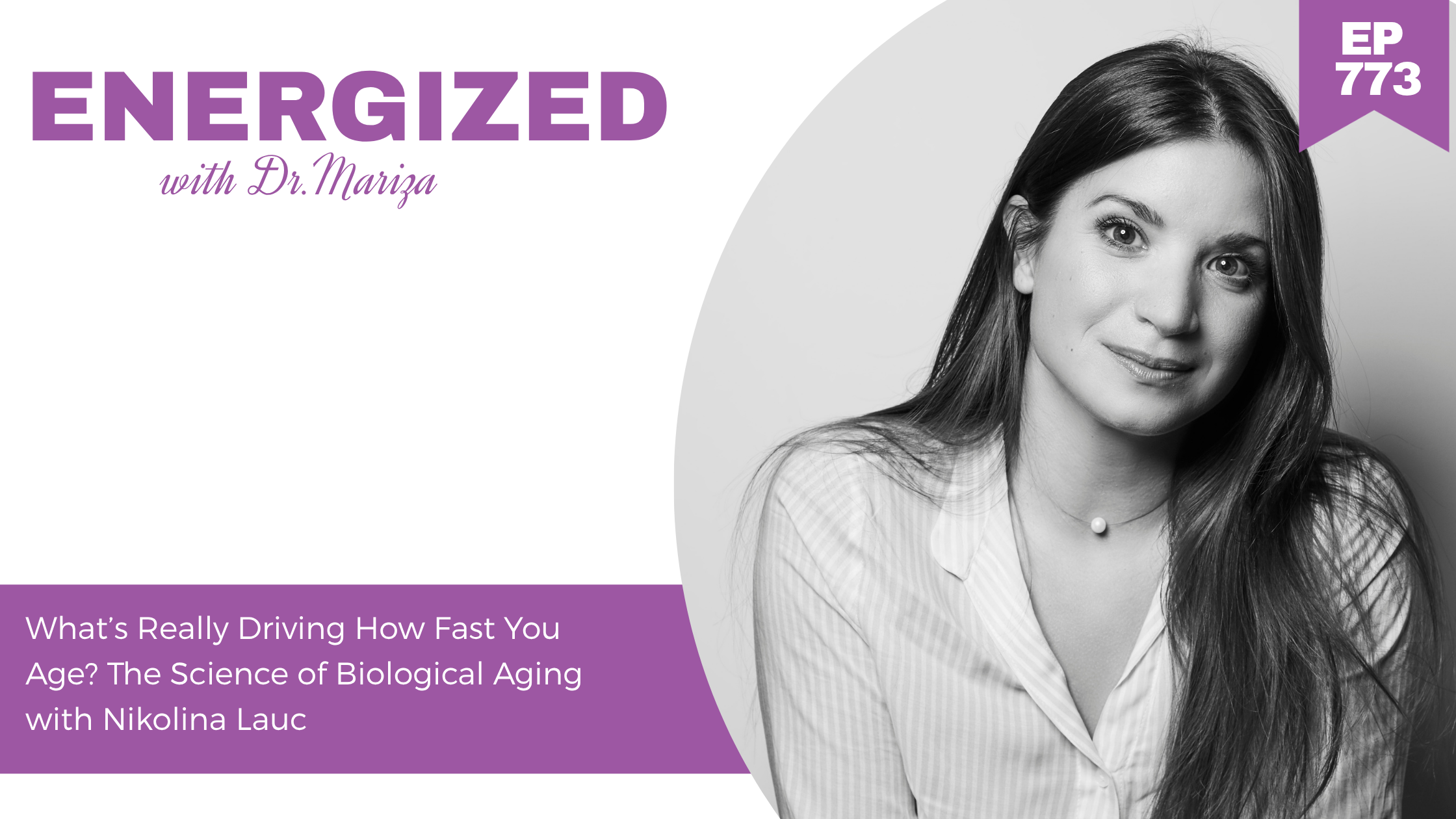
773: What’s Really Driving How Fast You Age? The Science of Biological Aging with Nikolina Lauc

Listen to the Episode Here

Or, listen on your favorite app: iTunes (Apple Podcasts) | Stitcher | Spotify | Pocketcasts

Episode Summary

What if perimenopause isn’t only changing your hormones, but also changing how your body is aging underneath the surface?

In this episode, Dr. Mariza sits down with Nikolina Lauc, CEO and co-founder of GlycanAge, to explore emerging research on immune aging, chronic low-grade inflammation, and the menopause transition.

Nikolina shares research showing just how dramatically markers of “inflammaging” can shift when estrogen declines. In one hormone-blocking study, women gained 9.1 years on GlycanAge markers within six months, while research following twins found the rate of immune aging accelerated during the transition from perimenopause to menopause.

They unpack why this inflammation may be happening even when your traditional labs look normal, what glycans can reveal about how your immune system is functioning, and why biological age is more complex than a single number.

They also explore the research around HRT, exercise, weight loss, fasting, GLP-1 medications, nutrition, and why the same intervention doesn’t work the same way for every woman.

Listen now to discover what may be happening beneath the surface in perimenopause and how better data could help you become more proactive about how you age.

NIKOLINA LAUC

Nikolina Lauc is the CEO and co-founder of GlycanAge, a longevity biotechnology company focused on glycans, immune aging, chronic inflammation, and biological age.

GlycanAge’s research focuses specifically on “inflammaging,” the chronic, low-grade systemic inflammation associated with aging. Its work examines glycan structures on antibodies to better understand whether the immune system is behaving in a more pro-inflammatory or anti-inflammatory way.

IN THIS EPISODE

  1. What biological age actually means and why there isn’t one universal biological-age number
  2. How chronic low-grade inflammation can develop without obvious symptoms
  3. Why immune-aging markers may accelerate during the menopause transition
  4. How declining estrogen influences inflammation and immune function
  5. Why your hormone and traditional inflammatory labs can look normal while something is shifting
  6. What glycans can reveal about your immune system and inflammaging
  7. What the research suggests about HRT, exercise, weight loss, fasting, and GLP-1s
  8. Why interventions for healthy aging need to be personalized

QUOTES

“There’s never going to be one biological age.”

“Not everybody experiences perimenopause in the same way.”

“There’s no universal diet.”

RESOURCES MENTIONED

Use Code ENERGIZED and Get 10% Off on your GlycanAge Single Order or Subscription

GlycanAge Website

GlycanAge Instagram

GlycanAge LinkedIn

RELATED EPISODES 

771: Beyond Hot Flashes: The 103 Symptoms of Perimenopause No One Talks About with Andrea Donsky

770: The Heart Disease Risk Factor Most Women Aren’t Watching: What Your Blood Sugar and Insulin Can Reveal with Dr. Philip Ovadia

769: Is It Perimenopause or Something Else? How to Finally Connect the Dots with Dr. Mariza

750: The Underlying Cellular Cause of Midlife Fatigue, Brain Fog & Low Motivation with Andrew Salzman

Free Download: Easy, Practical Tips to Get More Energy!

Download the free Energy-Boosting Cheat Sheet now to learn how to unlock abundant health and energy that lasts—in only seconds every day!
Read More
EP 772

772: The Cost of Holding It All Together: How Overfunctioning Changes Your Hormones, Brain & Metabolism with Dr. Mariza

Listen to the Episode Here

Or, listen on your favorite app: iTunes (Apple Podcasts) | Stitcher | Spotify | Pocketcasts

Episode Summary

Have you ever looked at the same life you were managing a year ago and wondered, “Why does everything suddenly feel so hard?”

You’re still ambitious. You’re still capable. You’re still the woman everyone depends on. But the stress you once brushed off gets under your skin. Your brain doesn’t feel as sharp. Sleep is changing. Your patience is shorter. And keeping all those plates spinning suddenly requires far more energy.

In this solo episode, Dr. Mariza explores what happens when the profound hormonal and neurological changes of perimenopause collide with decades of over-functioning.

She introduces what she calls the midlife capacity gap: the disconnect between the enormous load many women are carrying and the biological capacity they currently have to sustain it.

You’ll learn why simply pushing harder may widen that gap, how Dr. Mariza is redefining resilience, and why supporting your hormones, brain, metabolism, muscle, and sleep is only part of the conversation.

Because the goal isn’t to make your life smaller. It’s to build a body capable of sustaining the life you actually want while becoming far more discerning about what deserves your energy.

Listen now to rethink what resilience looks like in midlife and start protecting your capacity for what truly matters.

IN THIS EPISODE

  1. Why high-functioning women can feel blindsided by perimenopause
  2. What happens when the woman who always handles everything suddenly has less capacity
  3. How estrogen and progesterone shifts can affect your brain, sleep, mood, and stress response
  4. What over-functioning looks like and why it often gets rewarded
  5. The midlife capacity gap between the load you carry and your biological capacity
  6. Why pushing harder and becoming more disciplined may not be the answer
  7. How to redefine resilience around adapting, recovering, restoring, and thriving
  8. The question Dr. Mariza wants you asking: “Is this actually mine to carry?”

QUOTES

“Perimenopause doesn’t arrive in a vacuum.”

“Endurance is not resilience.”

“Doing less isn’t the same as caring less.”

RESOURCES MENTIONED

Order my newest book: The Perimenopause Revolution

Stop surviving and start thriving, join Midlife on Fire Collective now

The High Functioning Woman on Substack

RELATED EPISODES 

771: Beyond Hot Flashes: The 103 Symptoms of Perimenopause No One Talks About with Andrea Donsky

769: Is It Perimenopause or Something Else? How to Finally Connect the Dots with Dr. Mariza

764: Why Your Nervous System Feels Dysregulated (Even When You’re Doing Everything Right) with Roseann Capanna-Hodge

750: The Underlying Cellular Cause of Midlife Fatigue, Brain Fog & Low Motivation with Andrew Salzman

Free Download: Easy, Practical Tips to Get More Energy!

Download the free Energy-Boosting Cheat Sheet now to learn how to unlock abundant health and energy that lasts—in only seconds every day!
Read More
EP 771

771: Beyond Hot Flashes: The 103 Symptoms of Perimenopause No One Talks About with Andrea Donsky

Listen to the Episode Here

Or, listen on your favorite app: iTunes (Apple Podcasts) | Stitcher | Spotify | Pocketcasts

Episode Summary

What if the symptoms disrupting your life are connected to perimenopause, even if you’ve never had a hot flash?

Andrea Donsky spent 14 years in perimenopause and 11 of them with no idea what was happening to her body. Now, as a seven-time published menopause researcher, nutritionist, and bestselling author of Nourishing Menopause, she’s helping women put language to experiences that have been overlooked for far too long.

In this episode, Andrea joins Dr. Mariza to unpack her research into 103+ reported symptoms of perimenopause and menopause and why hot flashes aren’t even among the most common. Fatigue ranks #1, while nine of the top 10 symptoms are cognitive or mental-health related.

They also discuss why women are still being dismissed by healthcare providers, the foundational role of nutrition, blood sugar, sleep, movement, and stress management, and why perimenopause deserves to be viewed as an opportunity to protect your long-term health.

Most importantly, you’ll learn why this transition rarely looks the same from one woman to the next and why having the right vocabulary can completely change how you advocate for yourself.

Listen now to better understand what your changing body may be trying to tell you and the tools that can help you feel like yourself again.

ANDREA DONSKY

Andrea Donsky is a nutritionist, menopause researcher, bestselling author, and co-founder of We Are Morphus. She has worked in health and wellness for 26 years and has spent nearly a decade focused specifically on perimenopause and menopause.

Her research explores women’s real-world experiences during the menopause transition, including more than 100 reported symptoms and women’s experiences seeking care. She is the author of Nourishing Menopause, a research-backed guide combining nutrition, lifestyle, holistic health, and conventional approaches to help women feel their best through this transition.

IN THIS EPISODE

  1. Why Andrea spent 11 years in perimenopause without realizing it
  2. The 103+ symptoms women have reported during perimenopause and menopause
  3. Why fatigue is the #1 reported symptom, not hot flashes
  4. The surprising dominance of brain, cognitive, and mental-health symptoms
  5. Why 40% of women in Andrea’s research reported feeling dismissed by healthcare providers
  6. How nutrition, blood sugar, sleep, movement, and stress support women through this transition
  7. Why HRT can be one valuable tool alongside foundational lifestyle strategies
  8. How perimenopause can become a window of opportunity for protecting long-term health

QUOTES

“I was in perimenopause for 14 years total, 11 of which I had no idea.”

“We know that there’s 103 different symptoms of perimenopause and menopause.”

“The number one symptom across the board is fatigue.”

RESOURCES MENTIONED

Use code DRMARIZA and get 10% off on your Womeness Order

Nourishing Menopause by Andrea Donsky

Sign up now to receive your bonus: “The Nourishing Menopause Bonuses”

Andrea Donsky Website

Andrea Donsky Instagram

Andrea Donsky Youtube

RELATED EPISODES 

770: The Heart Disease Risk Factor Most Women Aren’t Watching: What Your Blood Sugar and Insulin Can Reveal with Dr. Philip Ovadia

769: Is It Perimenopause or Something Else? How to Finally Connect the Dots with Dr. Mariza

768: Why Your Period Gets So Weird in Perimenopause + What Actually Helps with Kaya and Yasmin Purohit

750: The Underlying Cellular Cause of Midlife Fatigue, Brain Fog & Low Motivation with Andrew Salzman

Free Download: Easy, Practical Tips to Get More Energy!

Download the free Energy-Boosting Cheat Sheet now to learn how to unlock abundant health and energy that lasts—in only seconds every day!

Read More